


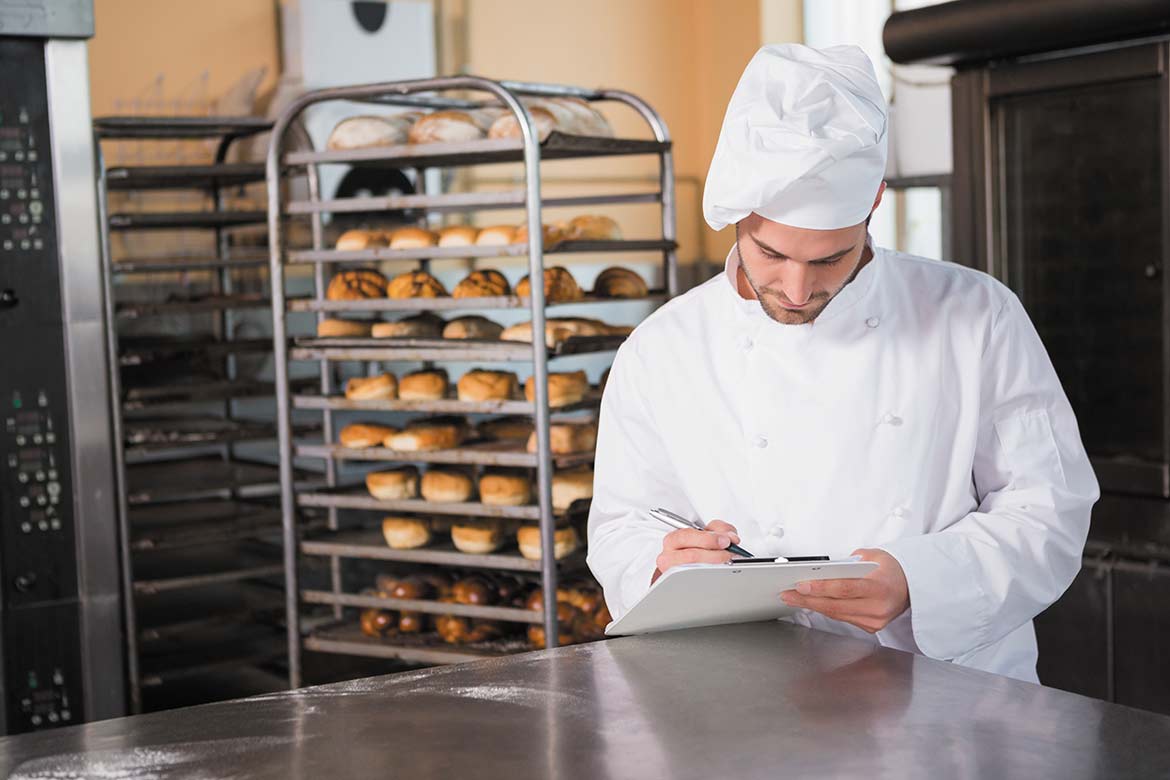
People around the country, regardless of stage of life or profession, are feeling the pinch at the moment. The cost of operating a business is going up and up, and with this being the case, how are small businesses (bakeries in particular) going to continue to survive? Baking Business investigated the impact of the current financial situation.
A number of factors have given rise to the financial situation that the world currently finds itself in—the slow slog out of the mire that was the COVID-19 pandemic, the war in Ukraine, and natural disasters in Australia and around the globe, among others.
The Australian Bureau of Statistics reported that the consumer price index (which is a measure of inflation) rose by 7.8 per cent over the course of 2022. This is the highest inflation rate increase since 1990.
All of this is happening at the same time as a massive worker shortage is sweeping the country, with small businesses and trades being some of the most heavily affected.

Baking Business spoke with Suzi Unwin (pictured above), owner of Bella & Tortie in Brisbane, Queensland, which closed down late last year due to financial pressures and, after taking some time out to evaluate expenditure and finances, is currently experiencing a reboot.
For some bakers, the shortages of skilled workers together with the ever increasing cost of doing business combines to make a fatal recipe for their businesses. This was the case with Bella & Tortie, Suzi says.
“I lacked the time to properly deal with the rising costs that were happening from week to week. I was absorbing these costs into the already slim product margins instead of hiring someone to help,” she says.
“There were drastic price increases that needed to be addressed and reflected in weekly price increases—which would most likely have been met with negative feedback from customers. A 50c increase every now and then is tolerable, but some things have gone up $3–4 since I closed in December.”

Baking Association of Australia executive officer Tony Smith (pictured above) says, “Bakeries, like all food businesses, are feeling the pain of ingredient rises across all products.
“The Association receives many calls requesting assistance every day. It’s affecting businesses across the country, regardless of if they are in a metro area or regional.”
Despite all of this, the outlook for Australian small businesses is not entirely bleak.
“One of the reasons that Australian companies typically do well when there is a recession or a market downturn is their resilience,” Amanda Price, head of high growth ventures at KPMG, told SBS.
“Many have learned to bootstrap-fund their own businesses and find different sources of funding. And from that, they grow very capital efficient business.”
Tony also indicates that bakers are coming up with their own innovative solutions to combat the rising cost of conducting business.
“While we cannot control raw material prices, we have some members who have shared their experiences and what they are doing to combat the rises,” he says.
“Some have joined buying groups, and others have tendered, through their own bakery business, to different suppliers to lock in prices and quantities.”
The BAA is also taking steps to help its members out with the various costs and price increases that they are currently facing, Tony says.
“The BAA, along with some members, has instigated an energy buying group, which will be a great saving to those are able to be part of the group.
“In conjunction with some of our sponsors, we are making special offers of products to our members, and we appreciate this. Any member who is unsure should contact the BAA to find out more.”
For many bakers, the varied nature of the demand for their products is also affecting how much product waste they produce, which in turn affects how much money is wasted in the course of business. Tony says this is another avenue that bakers can explore when looking at ways to counter the rising cost of ingredients and staff wages.
“Members have reviewed their sales mixes and deleted items that just do not move quick enough, so that will free up production times and ingredients wastage,” Tony says.
“The BAA is again working with members on this, and we urge members—and even non-members—to contact the BAA on this so we can assist with a sales mix analysis for free to support your bakery business.”
For Suzi, too, the outlook remains positive.
“I think that bakeries fare quite well during a recession. People will seek out a ‘little something’ to boost their day and well-being. A $6–10 treat seems okay and within budget, as opposed to going out for lunch or dinner,” she says.
“Birthdays and weddings all happen during a recession as well, and I find people will always set aside the money for a loved one’s celebration—albeit maybe a smaller cake size.”
Bella & Tortie has recently relaunched after Suzi took some time to evaluate her business practices and decide the best way to move forward. But this hasn’t come at no cost.
Suzi says, “Unfortunately, I’ve just had to raise my prices. There are some things I won’t budge on, and quality ingredients is one of them. I am fortunate I have had the time recently to pick apart my bill of materials—shop around with new suppliers and try and get the best prices possible.
“I’ve also sat with my accountant to go over my product costings and consider the ever-increasing costs of rent, outgoings, electricity, insurance, packaging and GST.”
For Suzi, as for many bakers, their businesses are also projects they are deeply passionate about, so finding ways to cut costs while still making the best possible produce available to customers is important.
She says, “I absolutely love what I do—I love baking and being my own boss, but it’s also a business and my only source of income—so I need to make sure I actually get an income to ensure that Bella & Tortie Version 2 can stick around for a long time—and a good time.”





COMMENTS