


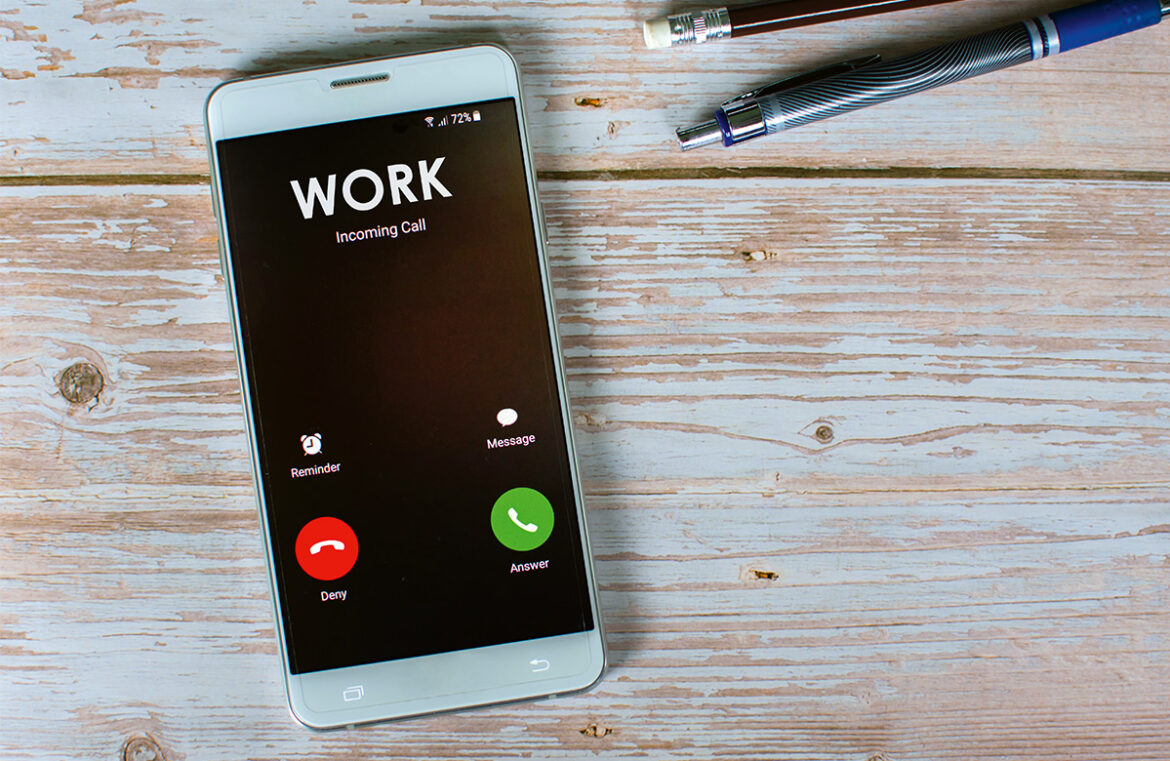
When it comes to work, we all know just how important it is to carve out down time so you can recover mentally, physically, and creatively. But how do you maintain this separation when the ways in which we can be contacted are only increasing?
For many of us we’re all too familiar with that feeling of wanting to send that final text message, email or check in on social media before clocking off for the day. “It’ll help tomorrow run more smoothly”, we tell ourselves, “it will take something off our plate” or even “this is such a great idea, I’ll quickly tell the team”.
In reality, however, the ability to be contacted at all hours of the day has translated into an “always on” mentality for many workers, which has coincided with reports that heightened anxiety and stress, disrupted sleep and the inability to switch off are all on the rise.
In fact, the Psychological health and safety in the Workplace report, released by Safe Work Australia in 2024, showed work-related mental health issues have continued to rise in recent years, with a reported 36.9 per cent increase between 2018 and 2024, many of which were largely attributable to workplace-related pressure.
To help counteract these figures, the Fair Work Ombudsman brought in the Right To Disconnect laws under the Fair Work Act in 2024, and in August 2025 these were extended to also cover small businesses of fewer than 15 employees.
The aim of these new laws is to help create a separation between work and home life, and to improve the overall wellbeing of employees, while also promoting better work management and preventing unpaid labour.

The Right to Disconnect Laws extend across all social media platforms
What is the Right To Disconnect?
So what exactly do the Right To Disconnect laws entail? Crucially, it doesn’t mean an employer is banned outright from contacting an employee after hours via text or email but rather it provides the employee with the legal back-up to say “I’m not reading that until I’m at work”.
Barrister at State Chambers NSW and Adviser to Baking Association of Australia Anton Duc said under this new law employees were prevented from being disciplined or treated unfairly for refusing to monitor or respond to work contact outside of paid hours – provided the reasoning behind their refusal is reasonable.
“The Right To Disconnect applies to everyone, whether that’s the employer – being the big boss or business owner, a third party like a client, customer or supplier, or employee peers including colleagues at the same level,” he said.
“That means if an employer or co-worker contacts an employee on Slack on a Sunday to ‘bounce an idea’, that employee has the right to ignore it.”
Anton said the Right To Disconnect law was also platform blind, meaning it covered all forms of contact whether that be via email or phone calls right through to texts and WhatsApp messages; social media groups that may be used for rosters, handover notes or tasks to be undertaken; and even in-person visits to residential premises.
But the importance lies in the finer details of just what makes a refusal to be contacted reasonable or unreasonable.
Anton said although there is no hard line when it comes to this delineation, there are several factors that need to be weighed up, from the reason for the contact to how it is made and how disruptive it is. Then there are considerations like whether the employee receives extra pay for being available out of hours, their level of responsibility within the business, and their own personal circumstances.
“[When it comes to the] reason for the contact – is it a true emergency like the store alarm is going off or a non-urgent query like ‘where is my apron?’. Is an employee paid a high salary that expects ‘reasonable additional hours’ or do they receive an on-call allowance?” he said.
“A heart surgeon or a CEO has a much higher availability bar than a casual retail assistant. And if you’re busy with kids or elderly parents, your refusal is much more likely to be seen as reasonable.”
Legalities surrounding Right To Disconnect
From the outset, it’s vital business owners have clear policies drafted about the Right to Disconnect that plainly state the details of when and how an employee may be contacted.
Anton said this would help to set clear expectations between the parties from the very start.
“Be clear in contracts about what ‘reasonable additional hours’ looks like. Employers can also use the ‘schedule send’ function for late-night emails so they land in the morning,” he said.
“If an employer ignores this new law and starts punishing employees for staying offline, then they are going to have legal difficulties.”
These could include General Protections Claims under which an employee could sue for “adverse action” if they are dismissed, or not offered overtime because they disconnected. Anton said this is called adverse action and is both unlawful and subject to penalties.
Then there are Stop Orders. Under these the Fair Work Commission can issue a formal order directing an employer to stop the contact, or conversely can tell an employee they must respond if their refusal is deemed unreasonable.
Finally, there are also fines. Anton said breaching a Fair Work Commission order can lead to court-imposed penalties, which as of 2024-25, can reach $18,780 for individuals and $93,900 for corporations.

The Right to Disconnect Laws have been extended to small businesses
Where to from here?
As with many new laws, Anton said test cases are bound to pop up in the coming years that will help to define the boundaries more clearly.
“To date, the courts can count on one hand the number of times it has dealt with these disputes, and the Fair Work Commission has put a hold on its review of the Right to Disconnect laws as there is actually nothing to review,” he said.
“[To keep abreast of updates and changes employers] should subscribe to Fair Work Ombudsman email alerts and follow reputable workplace law blogs. The Fair Work Commission publishes their decisions online, which discuss principles and practices.
“It’s important to remember that this law is about wellbeing and productivity. It’s not meant to kill flexibility.”
Anton said the benefits of these enforced boundaries actually go both ways, and it would benefit employers themselves to also avoid contact outside of work hours as much as possible.
“Expectations have changed due to this new law – employees are not to be contacted simply because it is convenient for the employer or the urge to contact comes into their mind,” he said.
“Be thoughtful and mindful about out of hours communications.”





COMMENTS