


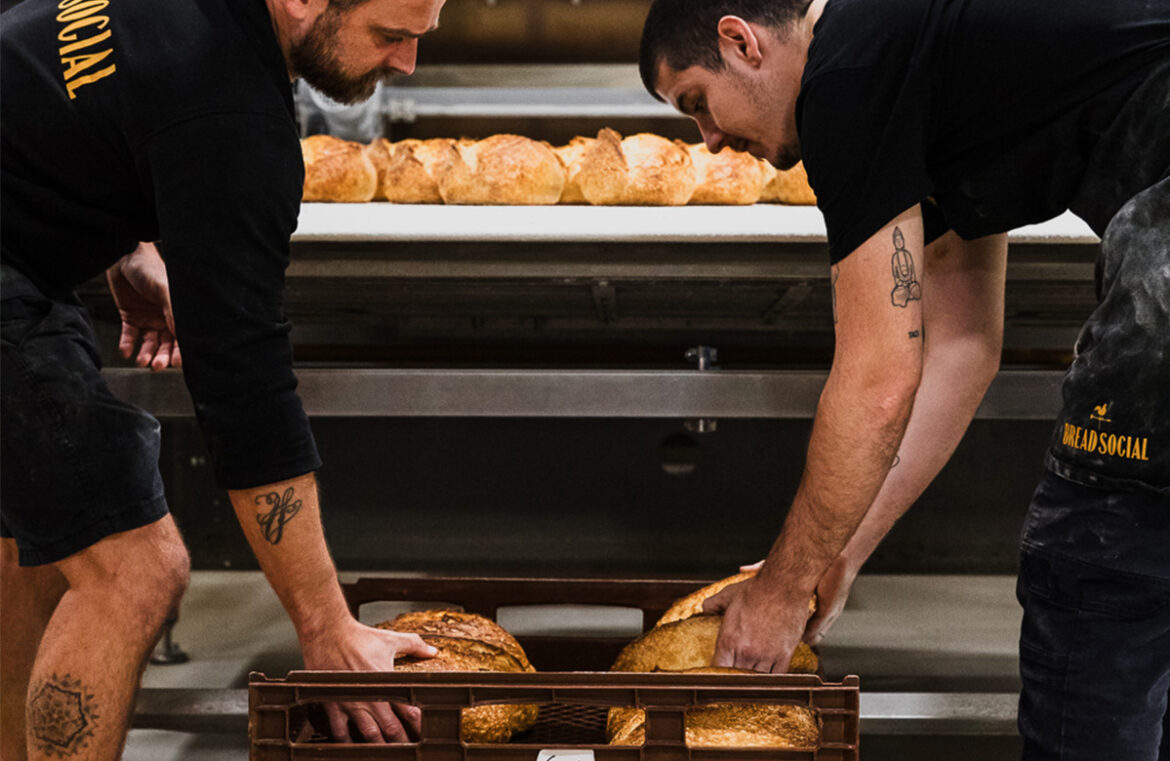
Although it’s a fairly common practice these days for bakeries to have a wholesale arm to their business, the how and why behind the process can remain a mystery. Baking Business spoke with two bakeries that have forged names for themselves in this space about what it takes to set up a successful wholesale business.
Walk into a café, restaurant or even grocery store and you may be surprised to find the name of your favourite bakery looking back at you from the menu.
For years now some of Australia’s biggest names in baking have created a second revenue stream for their business through wholesaling and, while the decision to create a wholesale offering can be based on many reasons – from filling a noticeable gap in the local market to platforming products or reaching a new consumer base – the process itself is not always a linear one.
So what does it take to successfully set up a wholesale business arm?
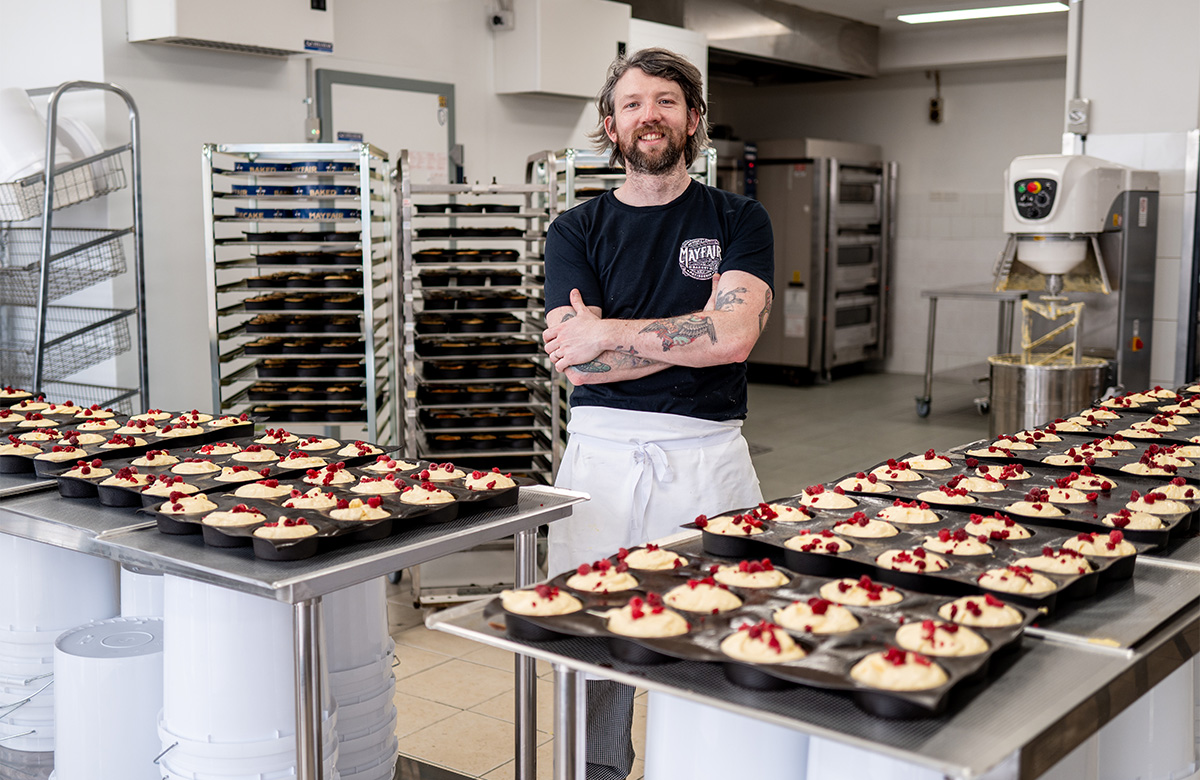
Phil Donnelly
Getting started
For Phil Donnelly from Mayfair Bakery and Patisserie in Adelaide, the decision to step into the wholesale realm came as something of a surprise to him, but one that has ultimately proved to be incredibly rewarding for his business.
With a 150-year history already behind it, Mayfair Bakery and Patisserie had built a solid name for itself right across South Australia. It was a reputation Phil planned to build on after buying the bakery in 2014, however, it quickly came to light there was a gap in the local market that he was uniquely positioned to fill.
“What I did find after we opened was there was a hole in the market for artisan bakery items for wholesale. There had been the same traditional suppliers for years, and they didn’t know people were looking for something new, fresh and exciting,” he said.
“Stores and cafes were coming in and asking for the product. I was in business, so I sold it to them.
“The wholesale arm to Mayfair Bakery came as a surprise. This was not something I had intended on adding to the business as part of my plan.”
Years were spent finetuning the wholesale products that were offered, while Phil himself learnt the ropes of operating a second business arm. He sought out potential customers and soon realised the full potential that came with making sales without the additional overheads involved in running a retail store. It’s a move, he says, that has proven to be vital to Mayfair Bakery and Patisserie’s overall growth.
The Bread Social’s delivery vans
For the Gold Coast-based The Bread Social it was a similar story. Co-owner Sam Saulwick said the decision to include a wholesale arm to The Bread Social had been an easy one to make, as it perfectly complemented the retail side of the business. It was implemented early on, with their products now found in a wide range of cafes and stores across Northern New South Wales, the Gold Coast, and in Brisbane.
“Given we operate in a seasonal tourist region it gave us an ability to lean into each revenue stream if the other wasn’t performing well,” he said.
Focusing primarily on producing a range of organic sourdough breads, Viennoiserie, yeasted bread rolls and brioche for restaurants, cafes and wholefood shops, Sam said he and fellow The Bread Social co-owners Tom Scott and Paul Giddings felt it was best to offer a smaller number of wholesale products and instead keep their focus on consistency and delivering a high-quality product each and every day.
“I think it can be easy to be led by what we feel the market wants as opposed to trusting our instincts and producing wholesale items we like to make and eat,” Sam said.
“Maintaining consistency in itself is difficult enough. To put out 100 per cent quality in each item every day is a hard task, so finding your corner of the market and staying true to it gives you an edge on a competitor. You can’t offer every wholesale item a customer is looking for, but you can make yours memorable.”
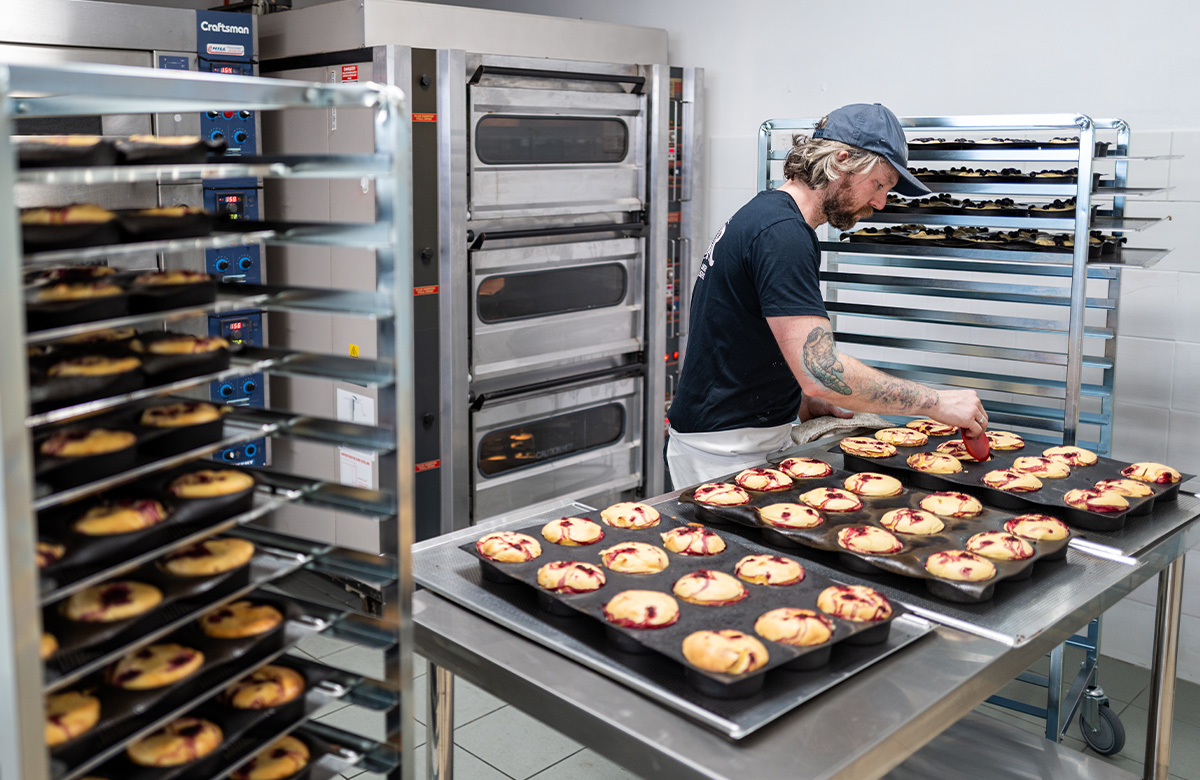
Phil at work in the Mayfair Patisserie and Bakery kitchen
Refining the process
So what should you do once you have set the wheels in motion?
Phil said for him the initial process began with settling on a set number of products that Mayfair Bakery and Patisserie would produce wholesale, before slowly scaling this number up over the years in line with customer demand.
It was a slow process, but these days almost the entire Mayfair Bakery range is available wholesale.
“I would look at picking five items or a range of products and look at the shelf life, how easy they are to produce in bigger batches, how they transport, and whether they can be frozen,” Phil said.
“Other considerations that need to be made are whether you can wholesale with your current [business] arrangement? If you can, then you will find out what you’re short on – whether that’s freezer space, a new van or staff.
“But unless you can wear the upfront cost of the investment and wait for the business to come, in my experience it’s better if you can utilise what you have until you just can’t any longer – that is a far more viable option.”
Sam said for them it had been vital for The Bread Social to be prepared financially to invest in more equipment that made the overall process easier on the team – including reducing the potential for injuries and increasing job satisfaction – as well as being more cost effective overall.
“The quantities of ingredients [we needed] grew substantially, which meant we could request a price review from suppliers,” he said.
“Make sure you invest in good software. Find something that is bakery specific and offers a customer-facing app so it’s user friendly for your client, and makes recipes and quantities easy on your team.”
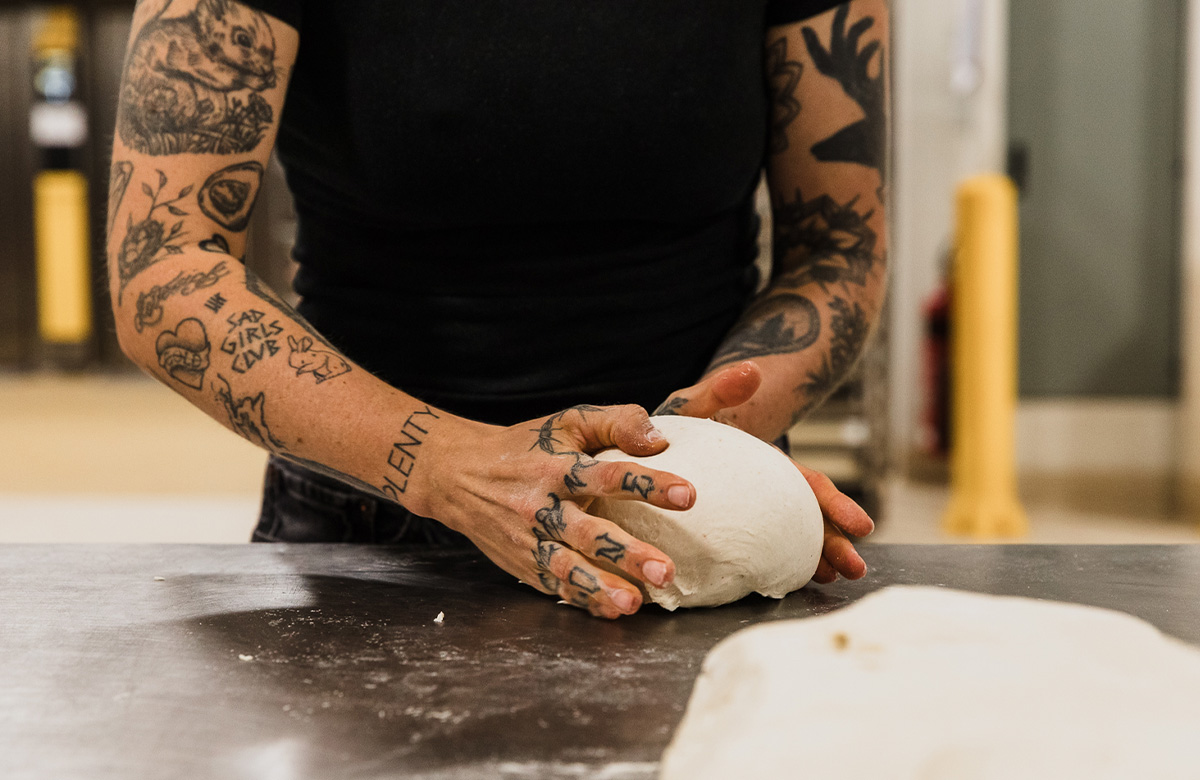
The Bread Social team at work
Weighing up the wholesale pros and cons
As your business’s name – and products – begin to travel further, there can be numerous positives from obvious ones like increased sales to the more intricate ones like getting in-depth and up-to-date data about changing consumer tastes and trends that can allow you to adapt your range.
While it can be a huge amount of work, Phil said for him the pros of having a wholesale arm to Mayfair Bakery and Patisserie have far outweighed any of the potential cons.
“You get to sell more food to more customers, grow your team, and expand your reach. It gives you a taste of what markets or locations are doing what. This is great research and the numbers give you great knowledge to make important decisions,” he said.
“For instance, our cheesecake range was so successful in South Australia that we used this data to see where we already supplying the product across the state and then began the process to sell into independent retail supermarkets.
“However, if you wholesale your whole range then your business may become less of a destination, because customers can obtain your products closer to themselves. If you’re not on top of your pricing this may creep up on you as well.”
The increase in sales and product numbers also goes hand-in-hand with more production hours, something Sam said they were conscious of at The Bread Social.
“Cons would include a requirement to be open for the majority of the year, given we offer wholesale delivery seven-days-a-week means we have to be available year-round,” he said.
“But really, high quality repetition is key… to put out 100 per cent quality in each item every day is a hard task, so finding your corner of the market and staying true to it gives you an edge on a competitor. You can’t offer every wholesale item a customer is looking for but you can make yours memorable – remember, you’re only as good as this morning’s delivery.”




COMMENTS