


With 2023 fast approaching, it’s good to get a head start on the different innovations and trends coming up in the next 12 months. Baking Business spoke to leading industry experts to get their thoughts on what 2023 might have in store.
Bread
There isn’t much that Brasserie Bread’s Michael Klausen doesn’t know about bread. I spoke with him about the future of bread and the memorable moments of 2022.

Michael Klausen, Brasserie Bread
“The rise of artisan small bakeries across the country is heart-warming for me. I will drive through a little town, and there is a local artisan bakery making awesome bread and pastries and a line at the door,” he says.
“The local bakery has definitely had a surge due to people working from home, and communities have connected around the bakery cafes. Healthier products are taking the front shelf in the shops, and the sugar is getting lower,” he continues.
Michael also says, “All the 2020 home baking has made people see how most work that goes into a real good loaf of bread and are appreciating the quality of artisan bread more.”
But 2022 hasn’t just seen the continuation of earlier trends.
Michael says, “I always get surprised with something that seems small and then grows very fast in the media and on the shelves. Vegan (plant-based) baked goods have been made for a very long time and now it is the buzzword. Most artisan bread is vegan but never sold as it.”
As for what’s looking to be popular in 2023, Michael says more generally, “More than ever, consumers are looking for indulgent experiences that are multi-sensorial and surprising.”
He also says there will be a focus on using simple ingredients.
“More and more, we will continue to see movement towards understanding the origin and provenance of the flour, and as a result, there will be a growing awareness among consumers about the food they eat,” Michael says.
He continues, “Farmers will be more and more accountable and involved. Consumers will demand the bakeries know more about the flour, where it is from and from who.”

Image: Shutterstock
Another trend in bread that we can look forward to, says Michael, is the focus on artisan pizza.
“The pizzerias are looking at the quality of the flour and are choosing to use a coarser flour and not super white flour 00. The crust is as important as a loaf of artisan bread.”
In the field of bread in particular, Michael says we can expect to see many different grains gaining popularity.
“We will see a use of interesting grains, used in many ways (flour, kibbled, saw mill use, sprouting, etc.). Black barley will be interesting and is now farmed in Australia and has a lot of interest.”
The things that Michael is hoping to see are things that he would have liked to see earlier.
“I spent a day at the Fine Food Expo in Melbourne and was extremely disappointed not to find any thinking about energy use, sustainability, and carbon reduction thinking. The only real sector that has moved forward in the last decades is packaging. I really hope we will see a shift in the industry helping bakeries with the changes coming,” he says.
Looking further afield than 2023, Michael says the waters become murkier.
“This is the question that is hard to answer, there are lots of obstacles ahead, with labour shortage, cost of goods increase, energy cost increase, and a potential decrease in spending. That said, this will drive innovation and new ways to make awesome products with the right cost,” says Michael.
Of baking particularly, he says, “We will probably see baked goods make with new ingredients that could be cheaper. We will see ways to avoid waste and putting the profit in the bin. Sizes of bread for retail will get smaller and, for food service, bigger. People will always go back to grass root products like bread in tough, uncertain times.”
Sweet Pastry and Chocolate
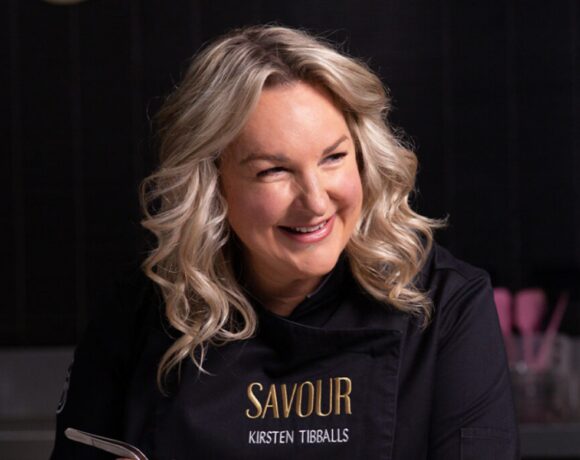
Internationally regarded as the Queen of Chocolate, no one would be better to talk about where chocolate and sweet pastry are headed than Kirsten Tibballs.

Kirsten Tibballs, Savour School
2022 has brought about a lot of changes, Kirsten says.
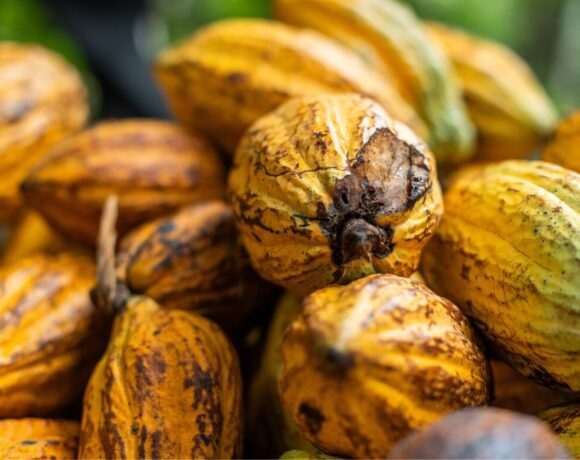
“2022 has brought a focus on low-sugar and sustainable ingredients. I recently returned from Italy, where I launched Barry Callebaut’s new chocolate concept, 2nd Generation. It focuses on the cocoa bean profile and flavour, and less sugar, with a notion of using fewer ingredients. This will be the future of chocolate.”
She continues, “Patisserie has seen a lot of innovative ways to recreate the croissant. We’ve seen different shapes and an array of non-traditional fillings.”
There is something, though, that surprised Kirsten in its popularity: giant cookies.
“A trend which is taking off quickly, led by chefs like Cedric Grolet and Yann Couvreur, is large-sized cookies with decadent, textural toppings such as pralines, caramel, and roasted nuts.”
As for 2023, Kirsten predicts more technology in chocolate.
“This is something quite close to my heart, just having come back from being President of the Jury for Taste at The World Chocolate Masters in Paris. It’s very exciting, we’ll see more 3D printing with chocolates which will expand design possibilities. Also, an increase in demand for snacking and tablet bars over individual chocolates.”

Image: Shutterstock
There will also be some changes regarding sweet pastry, Kirsten says.
“I believe 2023 will bring a shift in the way entremets are created. Stylistically, they’ll move away from detailed decorations and glazing. They’ll also be made with more cake and less mousse. The popularity of tarts will also increase, and we’ll see an increase in single product focussed businesses.”
“We are going to continue to see the revolution of both sweet and savoury viennoiserie products. Also, new takes on classic baked cakes like financier, friands, and different sized babka.”
As for what Kirsten would like to see going forward, her thoughts align somewhat with Michael’s. She hopes to see more environmentally friendly packaging and less food waste across the industry. A focus on healthy treats is also something Kirsten looks forward to seeing.
“I’d also like to see an emphasis on supporting each other and the next generation of patissiers, bakers, and chocolatiers,” she says.
Looking ahead past 2023, Kirsten foresees some issues with staffing in the industry.
“In Australia, the struggle to find staff will change the shape of our industry. Companies will rely more on wholesale supply of cakes and pastries as they’ll no longer have the resources to produce them inhouse. Having said that, the industry within Australia is wonderfully dynamic, and will continue to push boundaries and be one of the world leaders in innovation.”
Through it all, Kirsten is looking forward to what the future will bring.
“I’m excited to continue developing innovative concepts and creations, and sharing the latest trends to the wider community through my partnerships, social media, and of course, through Savour Online Classes,” she says, referring to the chocolate school that she runs.
Cake
Founder of Black Star Pastry and cutting-edge cake master Christopher Thé is well-poised to speak about innovations in cake in 2023, given that he’s on the cusp of starting a new cake brand.

Christopher Thé, Hearthe
2022 has seen the rise of the supermarket cake, Christopher says.
“The quality of readily available decorated cakes in supermarkets has risen remarkably. This is definitely giving artisan bakeries a run for their money. Also, the number of products readily available that allow you to create plant-based or gluten-free products is inspiring.”
Something else that 2022 has seen has been different croissants, with a variety of different fillings and flavour combinations.
Moving into 2023, Chris says we can expect to see an increase in the use of native ingredients.
He says, “As the range and availability of native Australian ingredients grows next year, we will see an increase in the use of these native ingredients in cake, which will allow new flavour parings not yet seen in the industry.”
Bakeries will also need to look toward minimising food waste, as the cost of running a business continues to increase.
“Bakers can no longer waste food due to overproduction. Anything not sold can wipe out profits from customer sales,” he says.
However, Chris continues, there is a solution.
“Fortunately, technology has come to the rescue. The latest batch of fast cooking ovens are able to regenerate baked goods from the fridge or freezer without loss of quality, allowing products like pies and sausage rolls to be heated to order in less than a minute. Used in conjunction with blast freezers and humidity controlled holding cabinets, bakers are now making great savings in time and labour as well as not having to bake every single item from scratch in the early hours of the morning. The key is to not lose the artisan qualities of the craft while making production easier and more affordable.”
Chris also says that customers are looking for things that will surprise them.
“After a couple of tough years, in 2023 consumers will move away from comfort food and will now once again look for surprise and novelty. Consumers are now wanting a holistic retail experience including dining in. Having a menu with beautifully plated food to supplement a grab and go menu is a good way to keep customers interested.”
This is especially going to be the case as the cost of living increases.
Chris says, “As the cost of living continues to increase, I believe the public will become more choosy where they spend their hard earned money. This will be split between higher quality baked goods available in supermarkets and boutique retail bakeries offering unique creations that cannot be mass produced. I believe fast home delivery will become more prominent leading to fewer delicate cakes that require refrigeration.”
Looking further afield, Chris forecasts that things will calm down price-wise.
“Ultimately wages and prices will normalise in a few years, but I believe bakery cafes will continue to perform strongly taking market share away from up market .”
Chris echoes the sentiments of both Kirsten and Michael in his desire for further sustainability efforts in the industry.
“I would like to see 2023 be a tipping point for sustainability. Hopefully the increasing number of consumers who base their choices on a bakery’s sustainable practices will encourage bakeries to put in the extra effort require to minimise their environmental footprint,” he says.
“I believe that as Australians we should not only be using more ingredients native to this land, but we should also be thinking more realistically about what foods suit our climate,” Chris continues.
In order to move forward, baking needs to look backwards, Chris says.

Image: Shutterstock
“I think the perfect cake should be designed well enough so it can sit outside of a fridge on a relatively warm day. This is achievable by using preservation techniques that are actually centuries old. If you think about it, mass refrigeration has been around only for less than a hundred years. Before then, we were very good at making our baked goods last a long time, but our modern reliance on electrical appliances has caused us to forget these skills,” he says.
Chris continues, “The challenge is to create long-lasting stable baked goods fit for our climate without compromising on taste, visual appeal, or texture.”


COMMENTS