


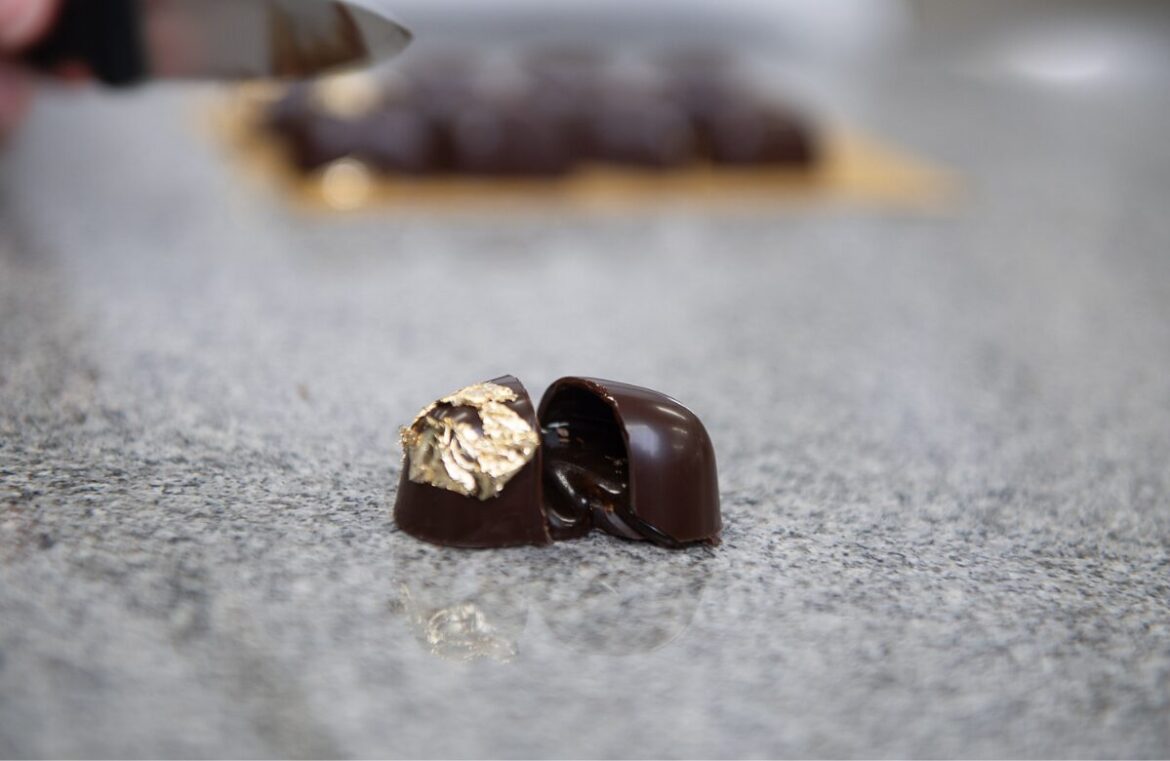
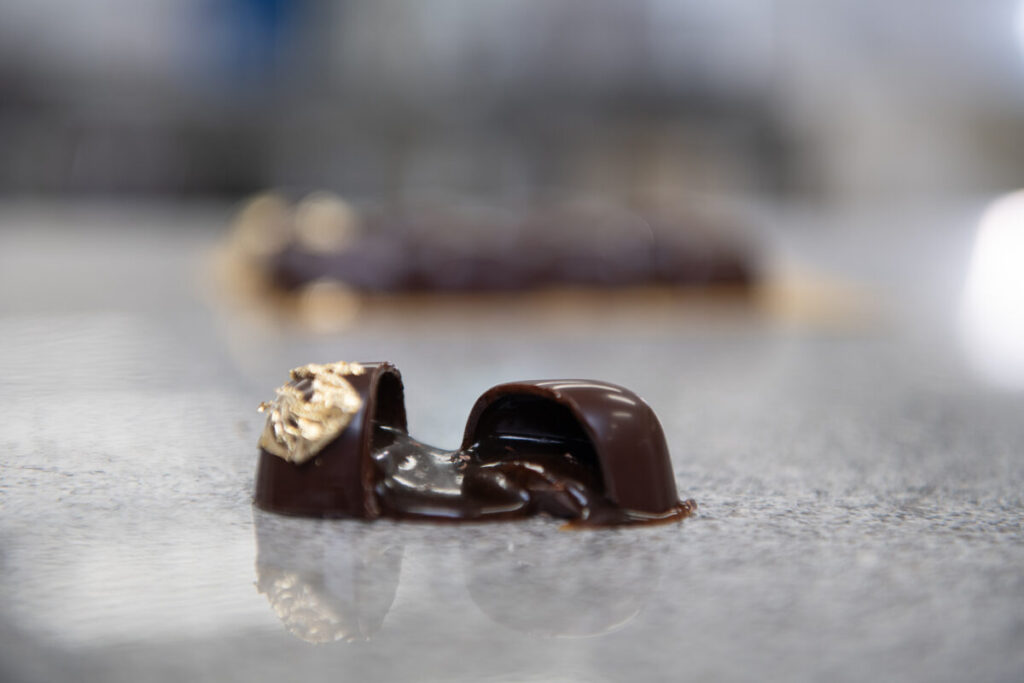
Chocolatier, baker, pastry chef and industry trainer Amy Sajinovic demonstrates how to make these delectably smooth but sweet coffee caramel pralines.
Amy said it was her early morning coffee, which she sips on in the early hours of the morning, which helped inspire the recipe.
“I wanted to create a classic filled chocolate that had a sweet but smooth texture encased in a rich dark shell,” she said.
“And who doesn’t love coffee and caramel together?”
Describing pralines as a work of art, Amy said each step of the process had to be precise, but it was the amount of creativity that goes into them makes them exceptional.
“It’s not just a regular piece of chocolate,” she said.
“These can be enjoyed with a cappuccino, hot chocolate or even taken to a dinner party to share with friends and family as an ‘after dinner mint’.”
 About Amy Sajinovic:
Amy Sajinovic trained as a baker, pastry chef and chocolatier, while completing an Apprenticeship – Certificate III in Baking (Combined) and Certificate IV in Advance Baking at William Angliss Institute, where she developed a strong foundation in artisan bread, pastry, and confectionary.
During her time at the Institute, she refined her skills in precision, flavour development, and high‑quality production standards by doing a Diploma in Food Science and Technology, winning the product development competition in 2017. This experience sparked her passion for mentoring emerging bakers and contributing to Australia’s evolving food industry, something she continues through her current role as a judge with the Baking Association Australia and Chief Judge for the Perth Royal Food Awards.
Amy is now an industry trainer at William Angliss Institute.
Coffee caramel pralines
WHAT YOU NEED
Chocolate
Use 56% Dark Coverture chocolate
Coffee Caramel Filling
| Ingredients | Weight (g) |
| Caster Sugar | 360 |
| Glucose Syrup | 150 |
| Water | 90 |
| Thickened Cream | 240 |
| Coffee Grind | 100 |
| Unsalted Butter | 70 |
Preparing chocolate moulds
Use a polycarbonate chocolate mould, ensuring it has been cleaned and is streak-free from any watermarks. Use a cotton pad to polish if needed.
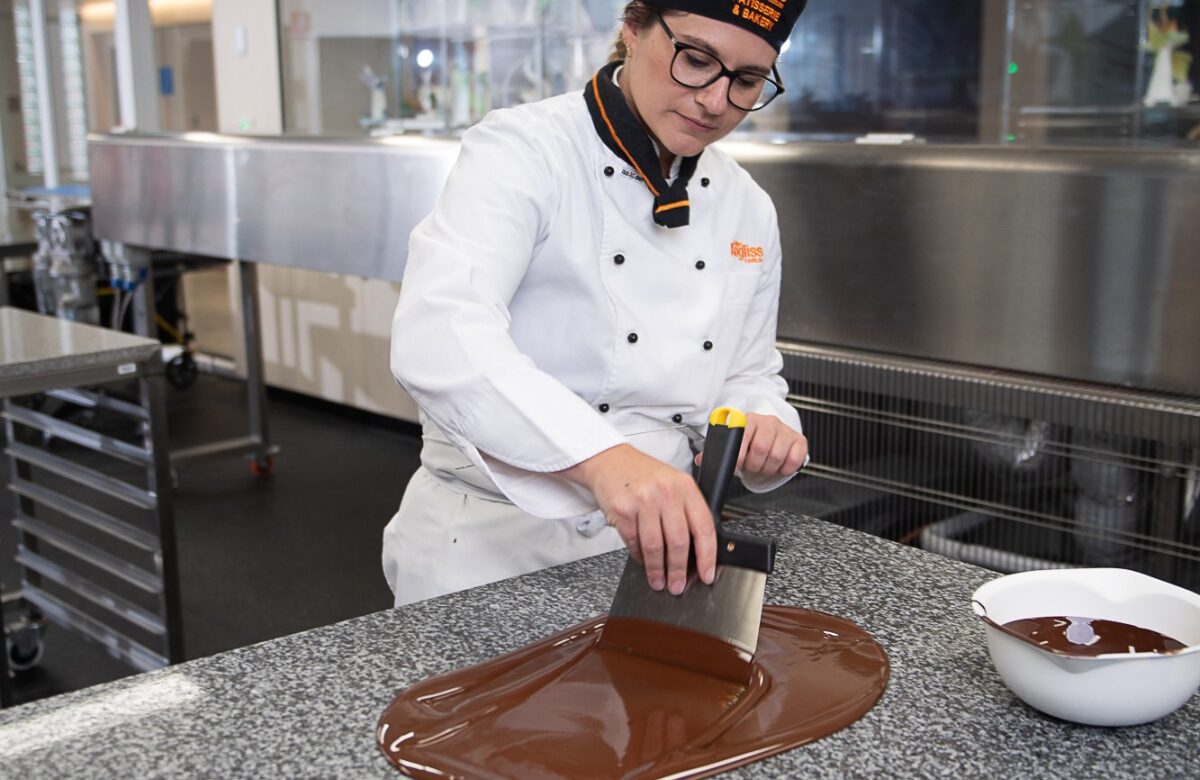
Marbling Tempering Method
Temper the chocolate by hand using the Marbling Method or Use an Automatic Tempering Machine:
Place chocolate in a plastic bowl into a microwave and heat in 20 second intervals. Stir the chocolate each time when checking it. Once the chocolate is 80 per cent melted continue stirring vigorously until all the chocolate is liquid and has reached 45°.
If you require additional heat use a heat gun or hair dryer, while stirring at the same time to achieve 45°.
TIP: don’t exceed 45°as chocolate burns easily.
Pour out three-quarters of the chocolate onto marble bench, leaving one-quarter in the bowl.
Using a metal chocolate scraper, move chocolate evenly on the bench to cool down to 28°. Avoid any lumps. If there are any lumps use a heat gun or hair dryer to melt down the lumps or to raise the temperature.
Place chocolate back into bowl and stir to combine, achieving 30°.
The working temperature for dark chocolate is 30°.
TIP: If you have an electric bain marie this is helpful to use to hold your chocolate at working temperature, ensuring you set it to the correct temperature.
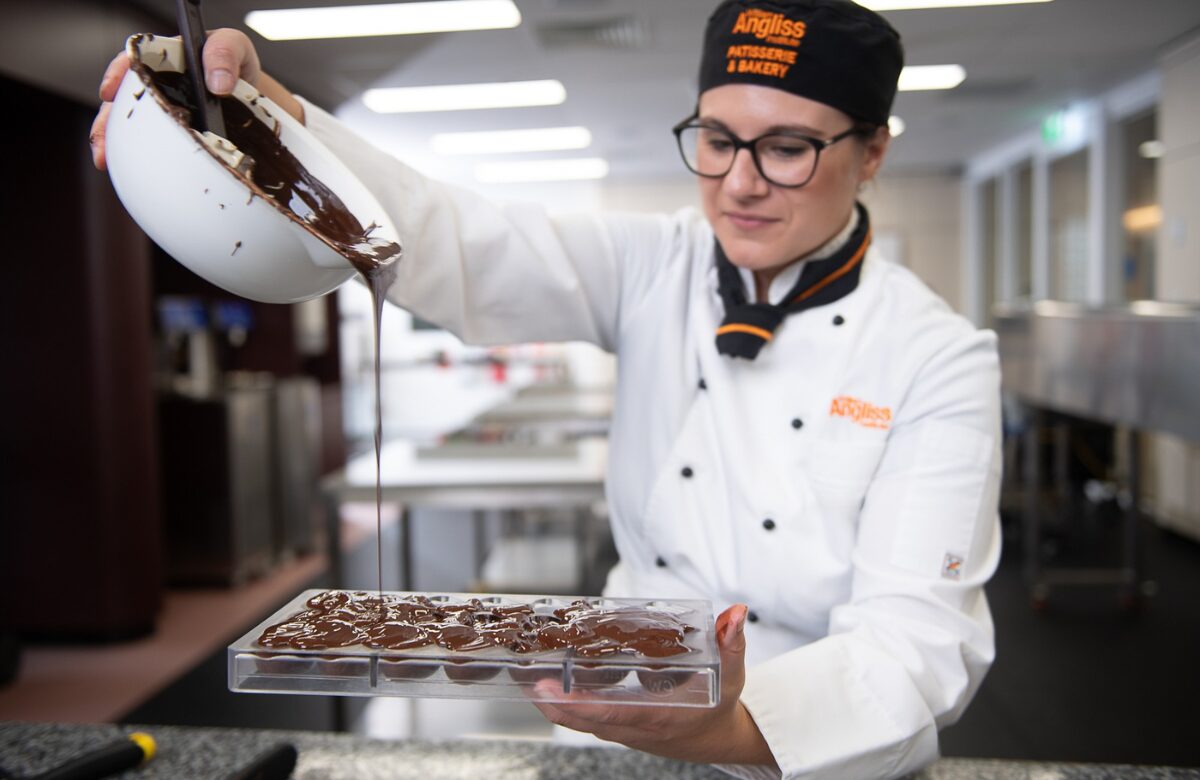
Shelling the Mould
Pour the dark chocolate over the mould, filling each cavity.
Tap the mould on the bench to remove any air bubbles
Tip the mould upside down to drain chocolate from the cavity for three to four seconds, tapping the sides gently.
When the mould is upside down, using a metal scraper carefully scrape across the top of the mould to clean any excess chocolate off and remove chocolate from the sides of the moulds.
Place the mould on the side to air dry at room temperature.
For the Coffee Caramel Filling
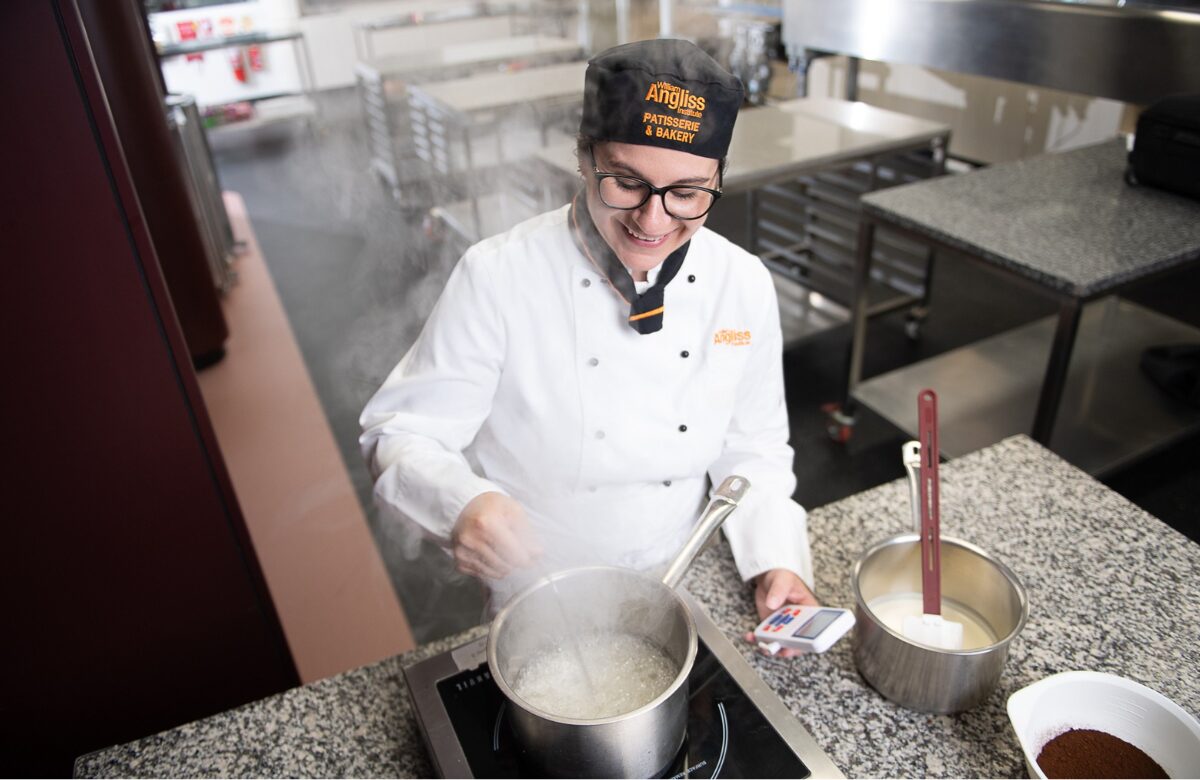
Weigh caster sugar, glucose and water into stainless steel pot and place on stove.
Caramelise until the temperature reaches 180°. Use a probe thermometer to check temperature.
TIP: don’t go over this temperature as it will create a burnt flavour. Keep stirring to a minimum during this process.
In a separate pot weigh the thickened cream and coffee and boil on stove
Once the cream and coffee have boiled, strain cream through a fine sieve with a muslin cloth.
TIP: Use a very fine sieve to avoid coffee grind going back into the cream.
Reweigh the cream back to 240g.
Add butter to cream mixture and re-boil.
Once sugar has reached 180° slowly pour hot cream mixture into the sugar pot and slowly stir with a whisk.
TIP: ensure you do this process slowly as it can cause the cream to overflow.
After both sugar mixture and cream are combined, use a stick blender to emulsify.
Place filling into a shallow tray to cool to 28-30°.
Any leftover filling can be used in a short crust tartlet shell to make yummy coffee caramel tarts.
Filling the moulds
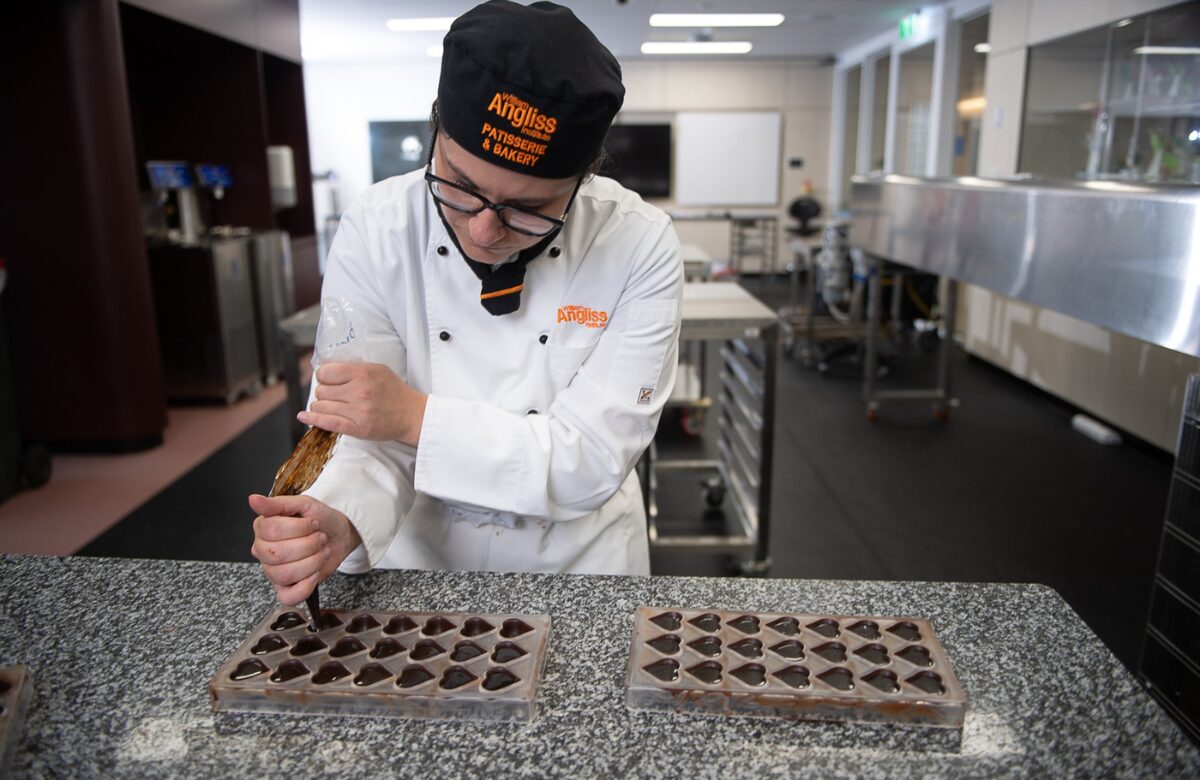
Pour filling into the piping bag. Filling needs to be at 28-30°.
Pipe filling into prepared chocolate cavity.
Leave a .5mm gap from the top
Once all your moulds have been filled, place in a cool room overnight.
Sealing the mould
Using tempered chocolate (see tempering method stage) pour chocolate over the cavities, keeping the mould flat so it does not move the filling.
Using a metal scraper, scrape any excess chocolate off the top and sides of the mould.
Once this is complete place mould into fridge for 20 minutes.
Remove from the fridge, leaving the mould for 20 minutes to bring back to room temperature.
Demoulding chocolates
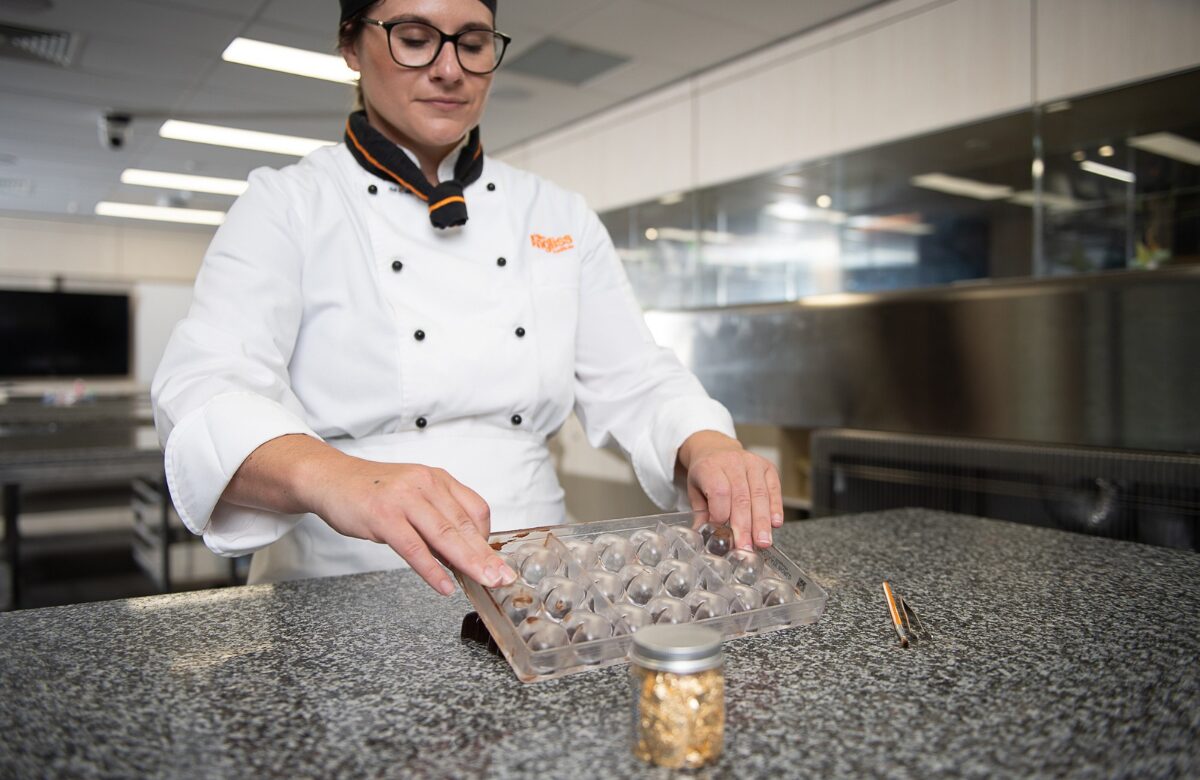
Gently crack the moulds (like an ice tray) to loosen the chocolates.
Tip the mould upside down and gently tap out onto the bench.
Decorating
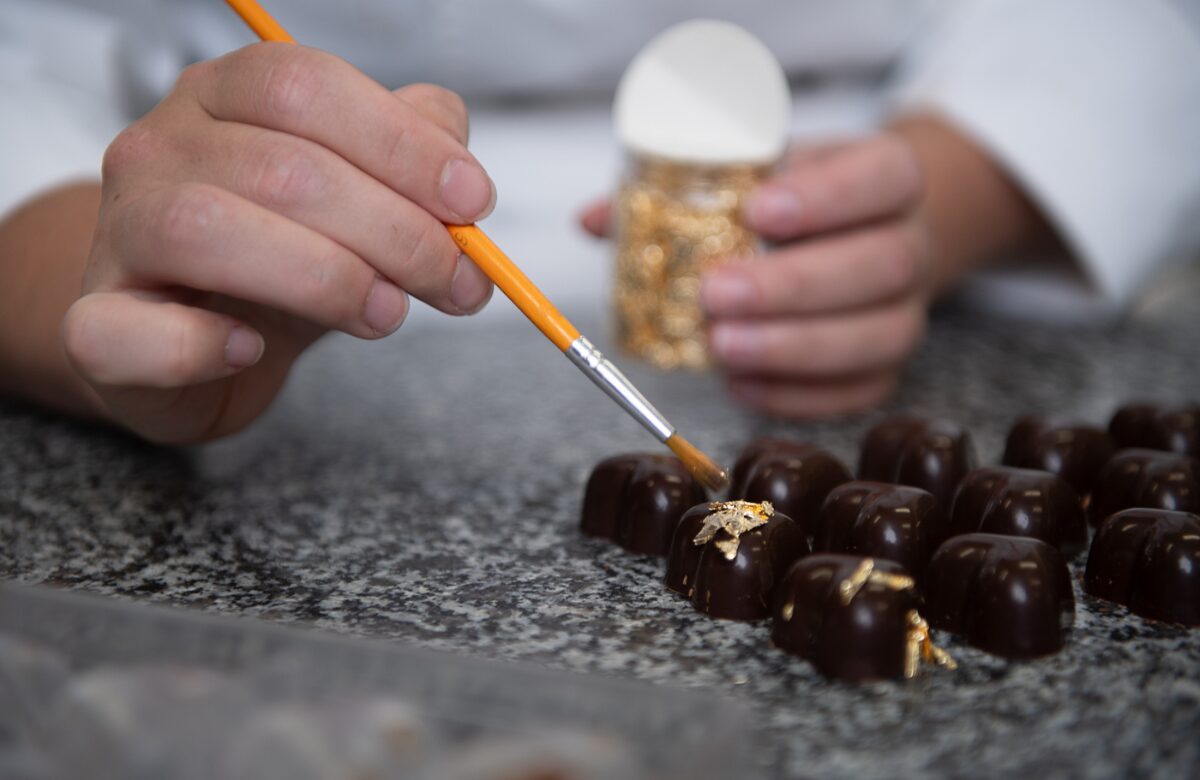
Using gold-leaf, pick-up pieces of gold leaf and place onto the chocolates and press down with a small paint brush so it sticks.
Serve at room temperature.



COMMENTS