


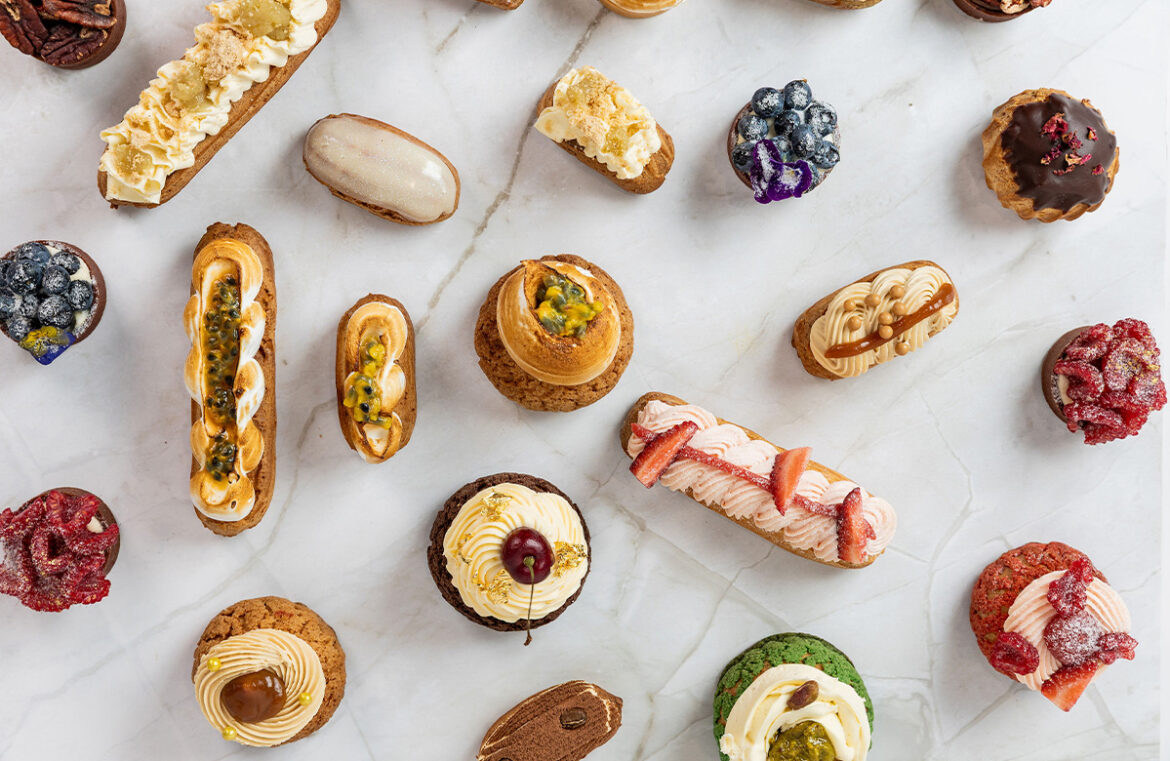
You know a pastry’s good when the French declare it their national runner-up. A 2023 survey found éclairs were preferred by 36% of French people, second only to fruit tarts. Some of France’s best pastry chefs have brought their masterpieces Down Under, and if our guess is correct, polls would show Aussie foodies ranking éclairs very highly too.
Like so many works of rich culture, art, and literature, éclairs have their roots in French history. You may have guessed the origin of éclairs because of the little fleck above the ‘e’ (called an e-acute), but did you know the word éclair means flash of lightning in French? There’s a consensus éclairs were named as such because they’re so delicious they’re eaten in a flash. Some believe éclair describes the lightning-like glistening of the chocolate glaze.
The year was around 1850 when French pastry chef Marie-Antoine Carême strayed from the pain a la duchesse recipe—a popular pastry comprising a sweet dough shell, cream filling, and garnish of slivered almonds. One fateful day, Carême coated the pastry in chocolate, creating the first ever éclair. The pastry became so popular the word éclair was attested in both French and English languages within just 10 years.
Antonin Carême, as he was better known, came from humble beginnings. He was raised by a poor family in Paris and worked in a cheap restaurant as a young child before becoming an apprentice to a top Parisian pâtissier. As a tourier, he quickly gained outstanding skills at working pastry dough to achieve the perfect puff pastry. Along with baking, architecture intrigued Carême, and his first invention combined elements from both. Carême crafted his baked beauties into extravagant centerpiece structures called croquembouches, and these still appear at weddings and special functions today.
We bet you’ve heard of the vol-au-vent and mille-feuille—these were too invented by Carême, ever the overachiever. His exceptional talent saw him recognised by the French royal family for whom he worked for several years. Carême even baked Emperor Napoleon’s wedding cake—talk about a career highlight! Carême helped simplify classical French cookery, insisted on the finest and most expensive ingredients, and was regarded as the foremost chef of his day.
Today, éclairs closely resemble their predecessors, comprising three key components: a choux pastry shell, cream filling, and glaze coating. However, the vastly superior range of ingredients now available means the flavours on offer are only limited to bakers’ imaginations.
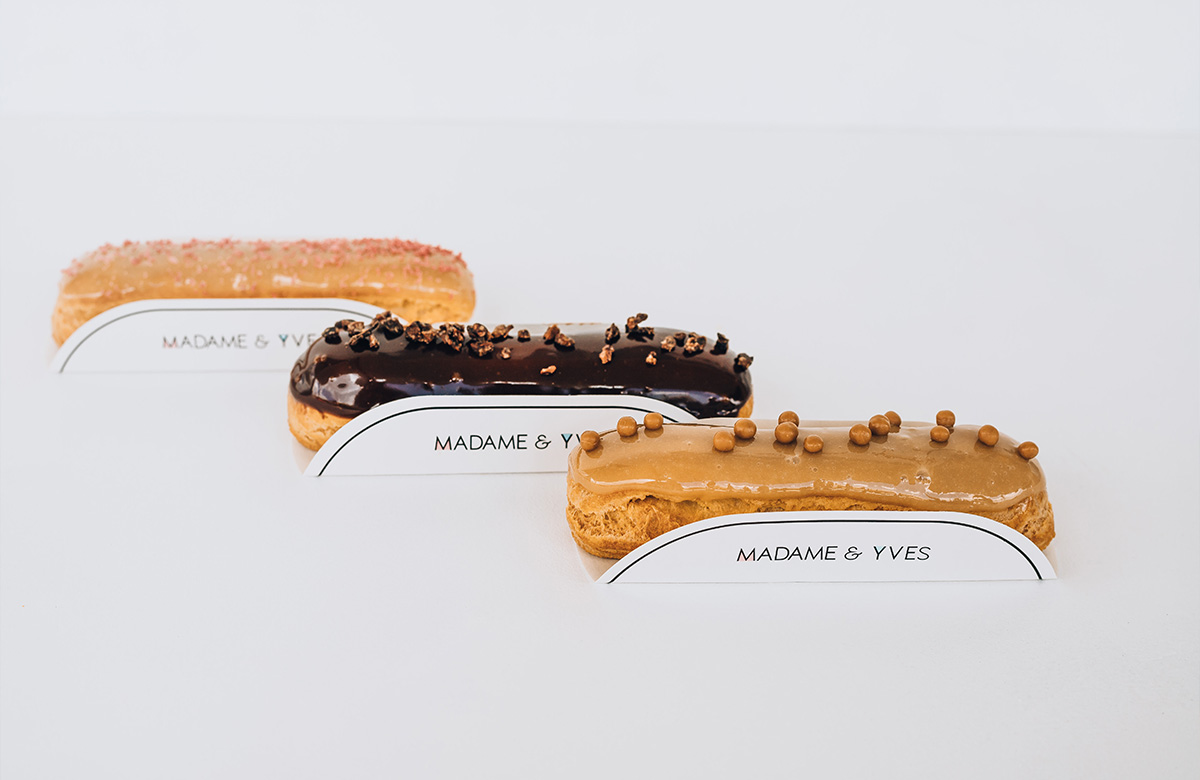
Eclairs from Madame & Yves
Flavour first
Michelin-trained pastry chef Pavel Stolarsky’s éclair inspiration came from a family tradition—he and his dad bought profiteroles whenever they visited friends for dinner. Pavel says opening the box and seeing the small, delicate, cream-filled pastries was always special. He knew that if he ever started his own pastry business, he would love to create something inspired by those memories.
With his partner Mary, Pavel co-owns pastry shop Eclair at the Bay and sells specialty éclairs, tarts, croquembouche, and cakes. The pair opened the flagship store in Byron Bay in 2023 and have since relocated to Brisbane where they recently opened their new brick-and-mortar patisserie.
“In Australia, choux pastry is still a bit underexplored compared to places like Europe. That excited me. It meant there was space to be creative, to experiment with bold flavours, new shapes, and different techniques,” Pavel said.
“Today we offer more than fifteen different flavours, from classic chocolate and vanilla to matcha, passion fruit, and snickers… My all-time favourite is the lemon éclair with Italian meringue. It’s made with a lemon curd topped with lightly torched Italian meringue and decorated with edible flowers. It’s a very elegant éclair.”
Since opening Eclair at the Bay, Pavel has attended masterclasses in France and South Korea to learn from the world’s best pastry chefs. Through that process, Pavel says he’s been exposed to new techniques, new approaches to choux pastry, and new ideas about texture and presentation—all tricks he incorporates into his own range.
“High-quality ingredients are absolutely fundamental to what we do at Eclair at the Bay. It’s something we prioritise every day in our kitchen. For me, flavour always comes first. I believe in bold, clear flavours that are done properly,” Pavel says.
“High-quality chocolate, butter and dairy make a huge difference in pastry. You can technically produce choux pastry or creams using cheaper ingredients, but it will always affect the flavour and texture in the final result.
“The visual aspect is important too. People eat with their eyes first, so presentation matters. I enjoy playing with colour and texture, creating pastries that look beautiful and inviting… [but] the visual should never come at the expense of taste.”
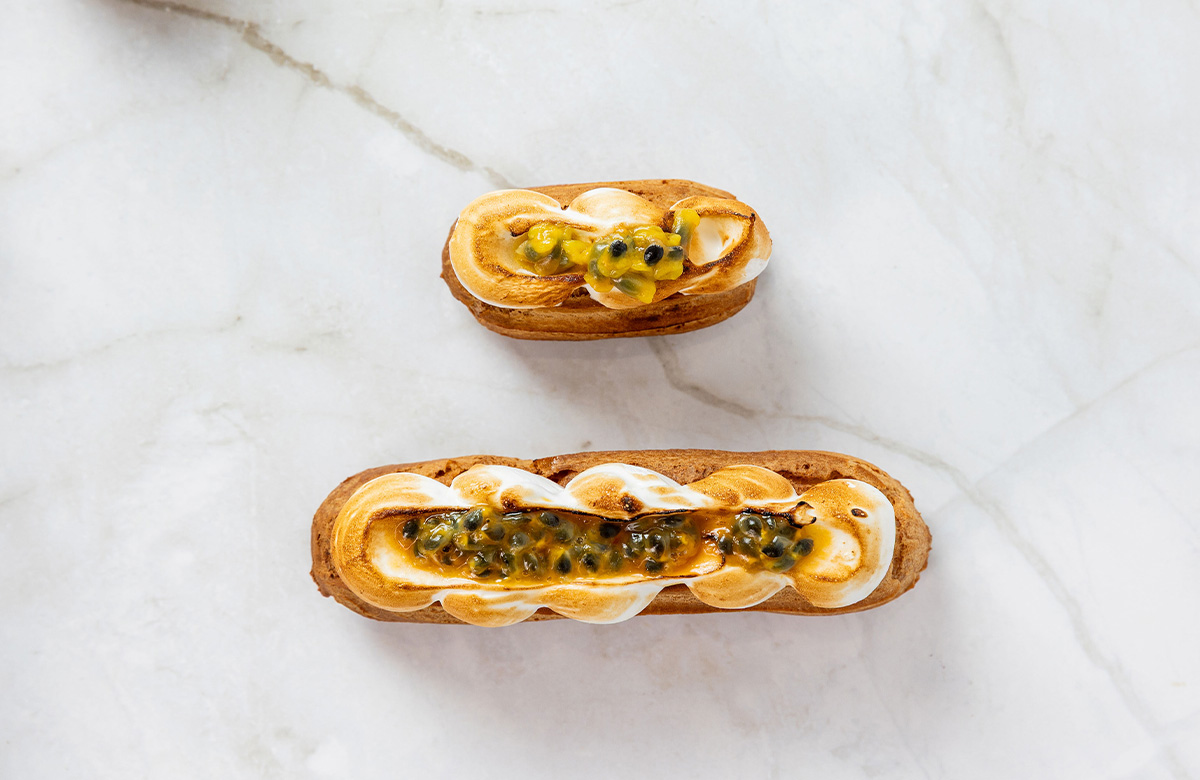
Eclair at the Bay create new versions of the classic pastry
A balancing act
French-born pastry chef Yves Scherrer knows no limits when it comes to dreaming up new éclairs. The 2019 Pastry World Cup Australian coach has created 140 different types of éclairs in his career, and he’s excited tackle the flavours that remain.
“For me, specialising in éclairs really began when Brasserie Ananas [restaurant] opened in 2012. The head chef and I decided to put a simple salted caramel éclair on the menu, filled and glazed to order. But when I say simple, it was anything but,” Yves said.
“All I had to work with was a small two-tray convection oven. The very first batches were wildly uneven; some over-coloured, some underbaked, others cracked or blistered.
“Choux pastry is very honest. It exposes everything: temperature fluctuations, airflow issues, imprecision in mixing. In a small convection oven, the fan can be aggressive and the heat inconsistent. If your batter is even slightly off, or your piping uneven, it shows immediately.”
Fourteen years on, Yves and his wife Jen co-own a specialty éclair store, aptly called Madame & Yves. In the six years since they opened shop, customers in Sydney’s east have flocked to the store to indulge their tastebuds in the delightful goodies.
“An éclair is all about balance: a lightly crisp shell with a smooth, airy cream… Over the years I’ve focused on mastering the choux pastry base. It’s now incredibly stable, light and delicate, yet structured enough to create multiple textures. That foundation plays out across our entire range: from seasonal éclairs, choux buns and even our iconic éclairzilla.”
Insisting on baking with only the best ingredients, Yves incorporates sel de Guérande – a sea salt from a very specific region of France – in his salted caramel éclair, cream infused with locally blended tea in his earl grey éclair, and the fine Valrhona chocolate in his best-selling chocolate éclair.
Yves says the wildest creation he’s made wasn’t a singular éclair flavour, but rather Madame & Yves’ ‘éclairzillas’. Measuring roughly twice as wide and four times as long as its regular-sized counterpart, the mega-éclair is a sweet treat on steroids.
“We love shareable desserts, but the traditional éclair is designed to be eaten quickly by one person. So, we thought, what if we transformed the éclair into a celebration dessert meant to be shared?” Yves said.
“We’ve created several over-the-top seasonal versions, from vanilla mascarpone-filled éclairs finished with dark chocolate mousse and whisky jelly to brighter versions with yuzu curd, raspberry chocolate, and yoghurt chantilly.
“That said, I’ve also experimented with some more unusual combinations over the years—like truffle and chestnut, or even bacon and chocolate. Those were definitely controversial, but surprisingly delicious.”
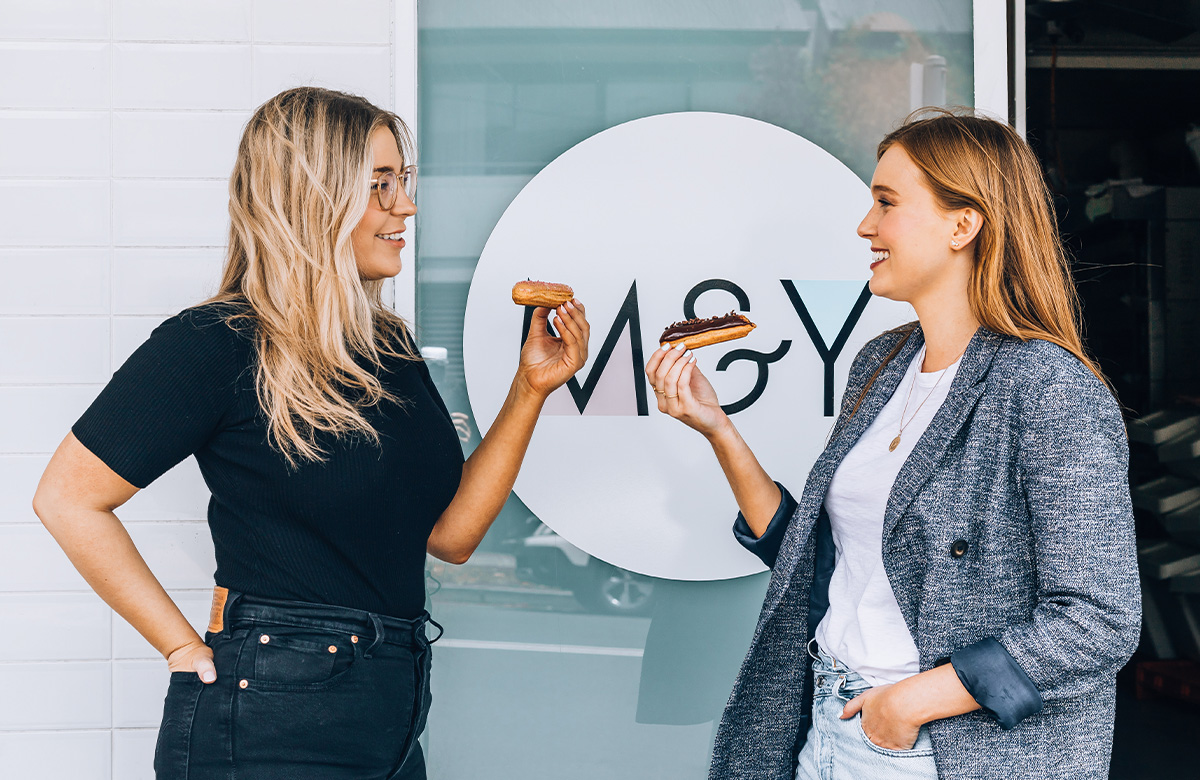
Madame & Yves has built its name on its pastries, including eclairs
Practice makes perfect
Both Pavel and Yves agree that once you’ve secured the high-quality ingredients required to make éclairs, the secret to baking an excellent batch is simple: they require practice, patience, and perseverance.
“Creating the perfect choux pastry is actually a very good measure of a pastry chef’s skill, and the only way we continue to grow in this craft is by constantly challenging ourselves. Choux is a seemingly simple pastry, yet achieving the perfect texture – and a stable, consistent recipe – is much harder than people think,” Yves says.
“If I compare the very first éclair I ever baked to the éclairs we produce today at Madame & Yves, the main differences are control and refinement.
“In many ways, the process [we use] hasn’t dramatically changed; it’s still the same classical technique. What has changed is the level of fine-tuning. Every oven behaves differently, and learning to adapt to each one is essential.”
“So the evolution of our choux pastry has really been about adapting: to ingredients, to equipment, and to the environment. The improvements didn’t come from reinventing the technique, but from years of observation, adjustment and precision.”
Pavel says repeating the same process over and over helps him understand how the dough behaves and provides insights into future improvements.
“Pastry requires patience. You practice, you fail, you adjust, and you try again. Sometimes things don’t work the way you expect, and that’s part of the process. Each mistake teaches you something new about the dough or the technique,” Pavel says.
“Every step matters: how long the dough rests, how much you mix it, making sure you don’t overmix the batter, the temperature of the oven, the baking settings, and the airflow inside the oven… Even piping the éclairs requires precision. The angle of the piping bag, the pressure you apply, and the movement of your hand all determine whether the éclairs will bake straight and evenly.
“It’s a craft built from many small details… Pastry made with care has something special. It’s difficult to explain technically, but you can taste it.”


COMMENTS