


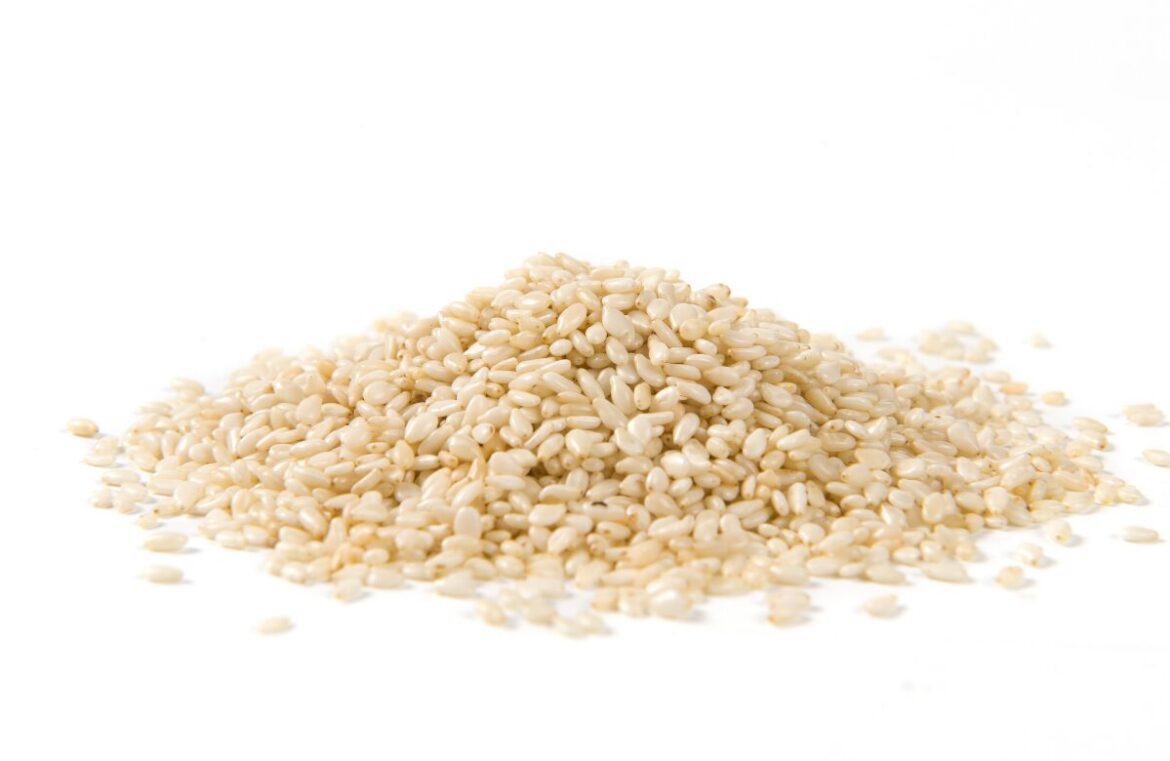
For decades Australia has imported sesame, but that’s could all be about to change.
The burgeoning sector has been identified as a high growth potential emerging industry, thanks in large part to a trial run throughout northern Australia.
Led by CQ University researcher Tieneke Trotter, several crops that were new to Australia were planted in 2020 before being narrowed down to the best performers: black and white sesame alongside fennel and kalonji – also known as Nigella seed.
Tieneke said a local sesame industry hadn’t been established as it had been traditionally produced very efficiently in countries with low labour costs and well-established production systems.
“Additionally, the varieties available in Australia were shattering, which means that when the plant is mature the seeds shake out of the pods, making them hard to harvest,” she said.
“Until recently there simply wasn’t a strong economic case for Australian growers to invest in sesame when imported seed was readily available.”
Tieneke said an added challenge was that sesame wasn’t a crop that could be introduced overnight. Rather, it requires varieties adapted to Australian conditions, agronomic packages for different environments, suitable planting and harvesting equipment, weed and disease management strategies, and reliable post-harvest handling systems.
“Much of that knowledge didn’t previously exist for Australian producers,” she said.
“Northern Australia, however, offers a unique opportunity. We have suitable climates, highly skilled growers, modern farming systems and importantly, access to non-shattering seed varieties. As markets seek greater supply chain security and diversification, and with increasing demand for sesame both in Australia and globally, the timing is now right to establish a domestic industry.”
Tieneke said the process of establishing a local sesame industry has gone far beyond conducting research trials, and has also included evaluating varieties across different environments, determining optimum planting time, irrigation strategies and fertilizer requirements. Then there is the investigation of weed, pest and disease management, improving harvesting systems, and developing post-harvest storage recommendations.
Throughout all this they have also worked closely with growers through demonstration sites, field days and industry forums to ensure research findings are able to be rapidly translated into commercial practice.
“Another major focus has been bringing together industry, researchers and commercial partners. Industry development is a collaborative process, and one of the strengths of our research programs has been creating those connections across Australia,” Tieneke said.
Although it’s unlikely sesame will become a major industry within any agricultural areas, it could potentially fit in well with crop rotation.
This, Tieneke noted, is one of sesame’s greatest strengths as it means the crop can complement current farming systems.
“In many regions of northern Australia, growers already rotate crops to improve soil health, reduce weed and disease pressure, and spread production risk,” she said.
“Sesame has the potential to become another valuable option within those rotations.
“Sesame differs from many existing summer crops, so it can help diversify farming systems and reduce reliance on a single commodity. It also allows growers to spread financial risk by accessing different markets.”
The next few years will be focused on transitioning the industry from research into broader commercial adoption, and Tieneke said they anticipate seeing more growers trialing sesame on commercial farms.
On a research level, she added they would continue to refine best management practices while also addressing ongoing challenges, particularly around weed management and mechanization.
“We will support our industry partners to work on market development,” she said.
“There is also increasing interest from the supply chain – including processors, exporters, and food manufacturers – which is an encouraging sign that the industry is maturing.
“Success won’t be measured by rapid expansion alone, but by building a sustainable industry based on sound science, strong grower confidence and reliable market opportunities.”


COMMENTS