






As Australia’s sole commercial black pepper farm, it’s not an overstatement when we say Donna Campgnolo from L&L Pepperfarms knows her stuff when it comes to the spice.
Can you tell us about L&L Pepperfarms?
The farm is located 150km south of Cairns in Far North Queensland. It was established by my father and uncle in the late 1980s when they were looking for an alternative to sugar cane. Pepper is grown around the world in tropical climates similar to our region, although we do get some cold winter temperatures, which the plant does not like
L&L Pepperfarms is Australia’s sole commercial black pepper farm. What does that mean for L&L Pepperfarms in terms of product demand and the size of harvest?
We are the only commercial black pepper farm in Australia. The harvest is usually around 3 tonnes of dry pepper.
We do supply fresh green peppercorns to some customers. This can vary depending on the year and if we just want to make black pepper. We also make white pepper, which is another process where the ripe berries are picked and then soaked to remove the skin and you are left with the peppercorns.
We usually only make between 50-100kg of this as it is quite time consuming and takes a week to get the skin off the berries and then they are dried. We usually sell out of the previous year’s harvest just as we are ready to pick the next harvest. If we predict we will be short we supply our clients that have been with us the longest first.
We supply to the local IGAs in our area and local butchers in the far north region.
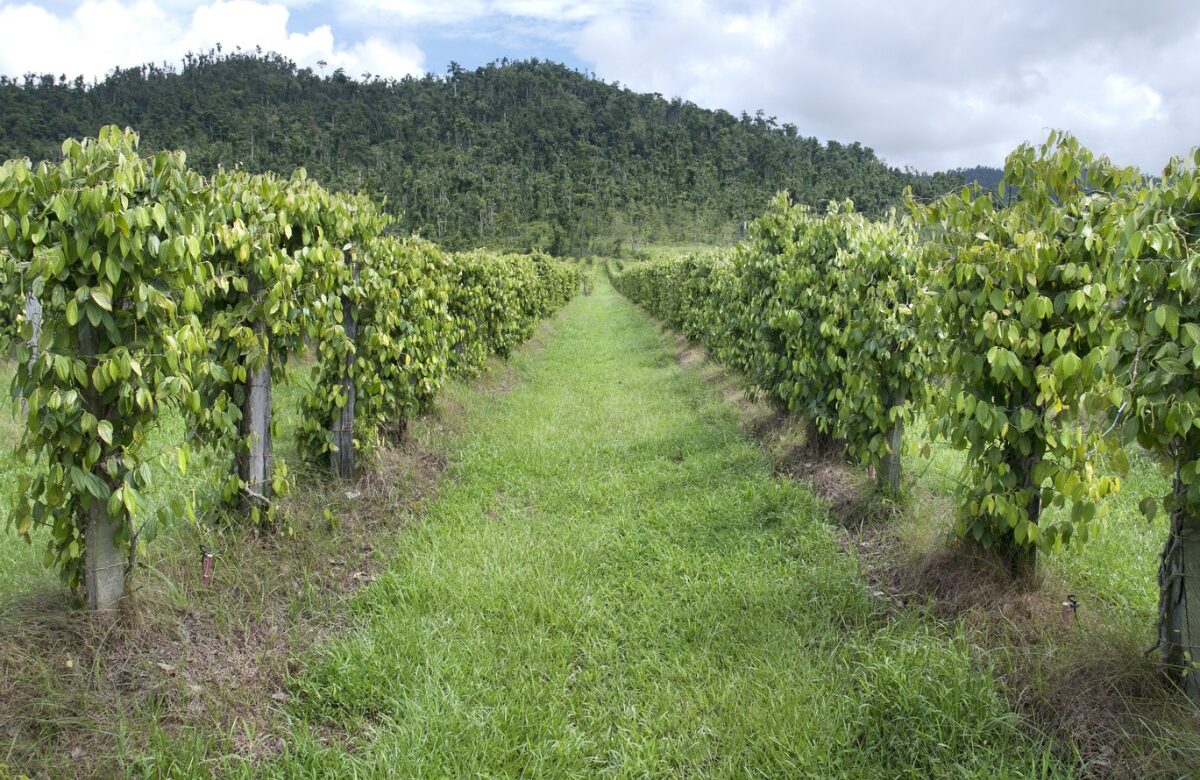
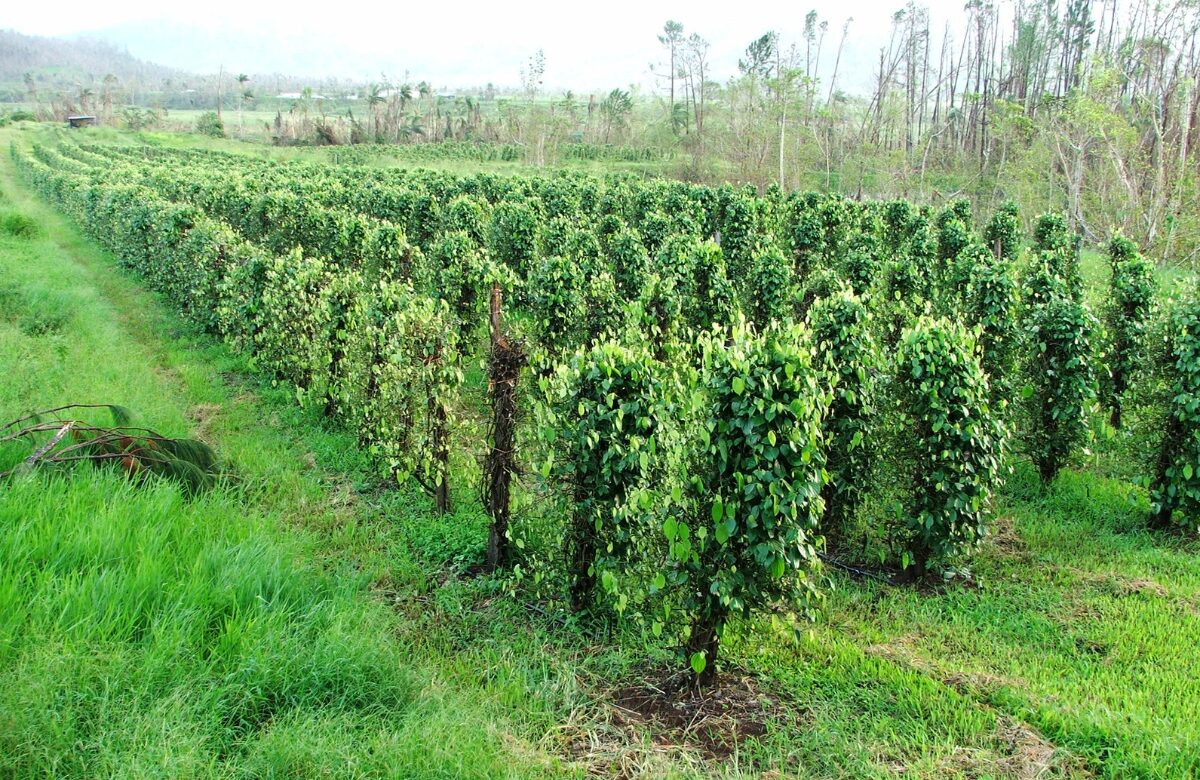
The pepper plants at L&L Pepperfarms
Can you share what an average day/week is like on the farm?
When it is not raining [it involves] weed control, fertilising through mister or irrigation, keeping interrows mowed, pruning and tying up plants. The rest of the time it is getting orders sent, grinding pepper and packing to order. All the cleaning and grinding and packaging is done on the farm.
Getting a bit more specific, how large is the farm?
It is a 45 ha farm – 3ha of pepper, which is approximately 5000 vines. The rest is sugar cane. Vines are grown on hardwood posts that are 1.75m tall on mounded rows.
The plant likes water but has to be well drained. The vines range from the original planting in late 1980s to the youngest, which would be five years old.
We have disease and pest issues that have to be dealt with. We don’t use any chemicals on the plants themselves. We use cover cropping and organic solutions for soil and leaf diseases and use parasitic wasps to control insect pests.
How long does it take for a plant to become mature?
It takes three years to be at economic production. Harvest is usually done once a year, depending on when flowering has happened. From flowering to harvest usually takes seven months.
Occasionally we may do a small pick of around 25 per cent of annual harvest, which is selective so as to maximise the yield.
What’s the harvest process like?
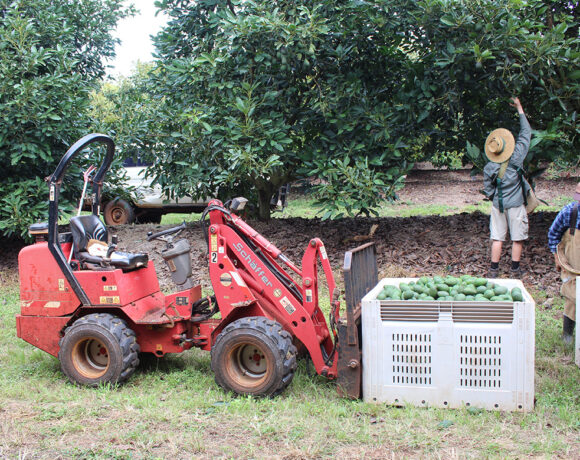
I have a group of 12 people that hand pick the spikes. This takes around 2 weeks.
It is transported back to the shed where the berries are taken of the spikes and then placed out to dry. We have developed our own machinery to do this. Depending on the humidity it can take anywhere from three to six days to dry.
Rain is our worst enemy and pepper can get mouldy if it is not dried to at least 12 per cent moisture. We tend to over dry our pepper to ensure we have no mould issues.
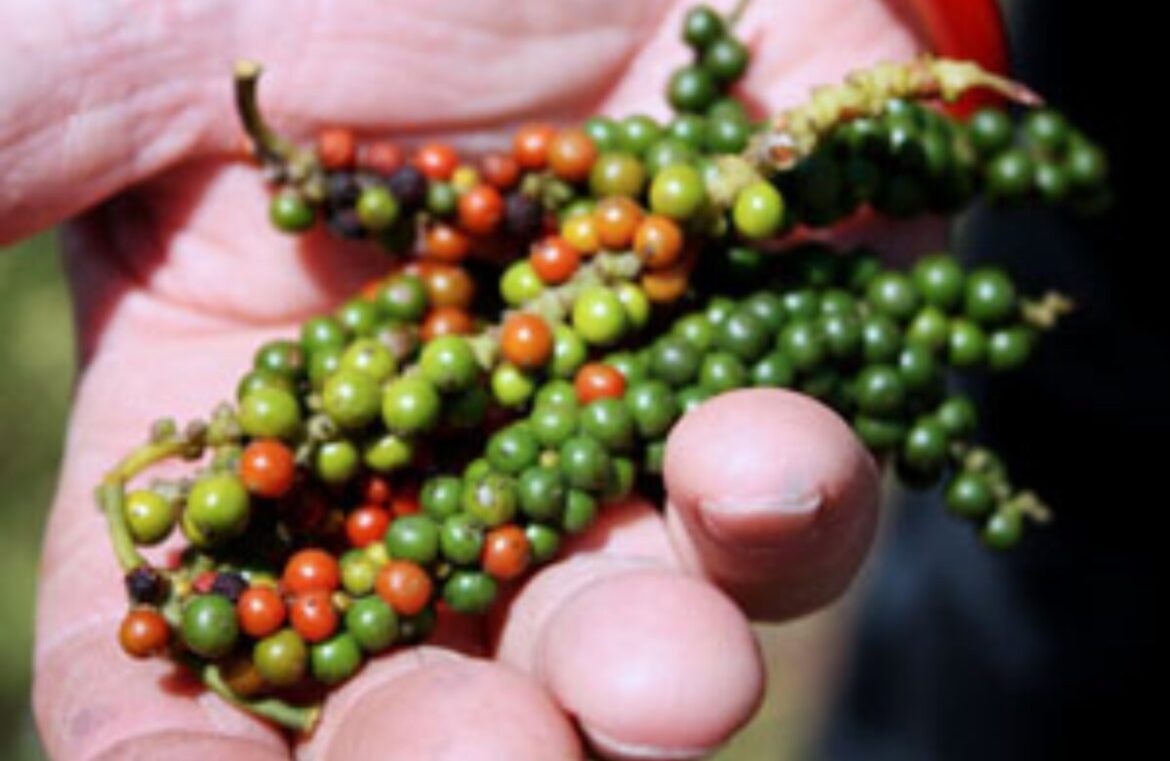
The pepper is picked by hand
How much pepper do you harvest each season?
We harvest up to 3 tonnes a year, which we store and process on demand. We turn the whole peppercorns into cracked, kibble and ground pepper and pack on demand. This helps us keep the product fresh.
What’s one thing bakers should keep in mind when it comes to pepper?
Bakers should make sure their pepper is as fresh as possible and buy whole pepper corns when possible, as the flavour can be lost once the pepper is ground and stored for periods of time.
It is better to buy smaller amounts and use it quickly than have it stored for long periods. Pepper must be stored in air-tight containers away from moisture and not in direct light.



COMMENTS