






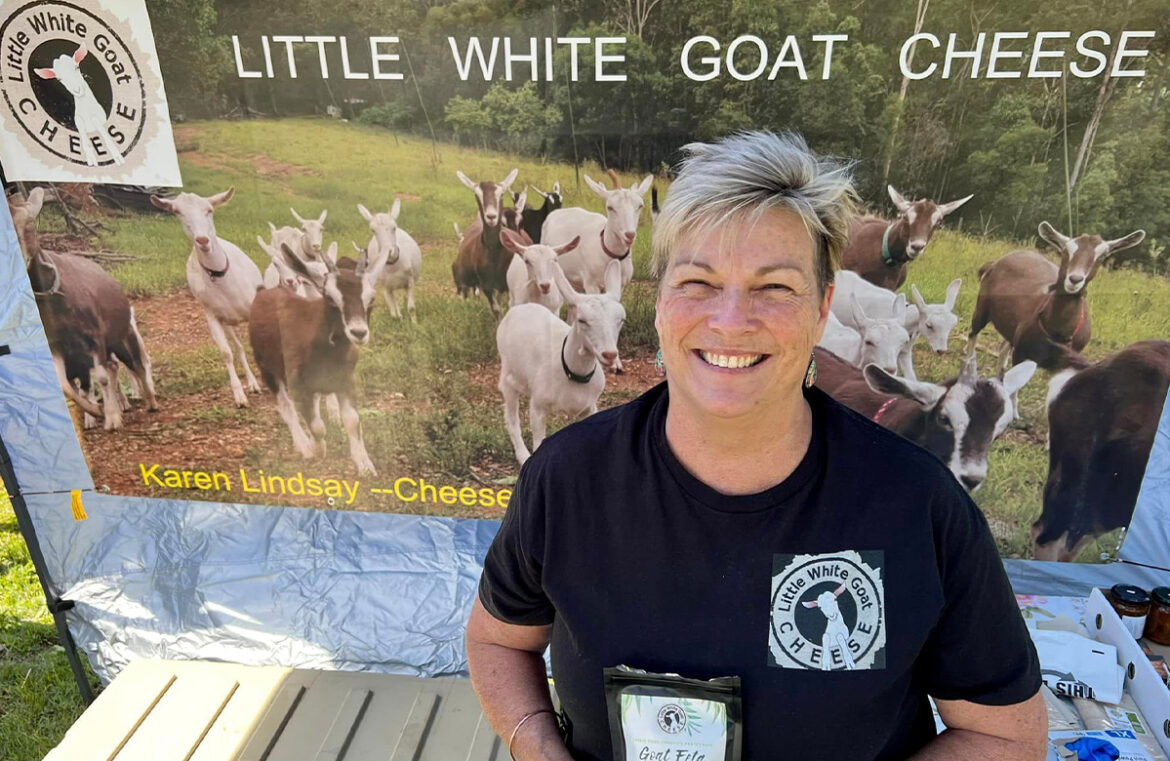
Goat cheese is a well-known and loved ingredient. Baking Business spoke with Little White Goat Cheese founder Karen Lindsay about what it takes to produce this mouth-watering product – and how she levelled it up.
Tell us about Little White Goat Cheese. What does an average day on the farm look like?
At Little White Goat Cheese, the day doesn’t start with spreadsheets or stainless steel benches — it starts with goats. Happy, well-cared-for goats. The kind that wander, browse, nap in the sun, and raise their kids naturally. Because here’s the truth: great cheese doesn’t begin in the dairy. It begins in the paddock.
An average day on the farm is a rhythm of animal care, milking, cheesemaking, problem-solving and dreaming up what’s next. There’s milk to handle gently, cultures to nurture, cheese to craft — and always a watchful eye on quality. It’s hands-on, sometimes muddy, often unpredictable, and never boring. And that connection — from animal to finished product — is exactly what gives Little White Goat Cheese its depth of flavour and integrity.
You’ve gone one step further and have moved from making fresh cheese to creating a cheese-based product that has a long shelf life, is gluten- and lactose-free, and helps reduce food waste. Can you take us back to the “aha” moment?
For years, the focus was on fresh Persian-style goat feta: creamy, delicate, bright and beloved by chefs and customers alike. But then came the question that changed everything: What if goat cheese could go further?
The “aha” didn’t arrive in a boardroom — it arrived out of necessity and curiosity. Watching food waste across the industry. Listening to bakers and food producers struggle with short shelf life, cold-chain dependence, and ingredient inconsistency. And wondering why such a powerful ingredient as goat cheese was limited by time and temperature.
That spark led to something genuinely new: a world-first freeze-dried goat feta with an 18-month ambient shelf life, while remaining gluten-free, lactose-free, intensely flavourful, and astonishingly versatile.
Same cheese. Same milk. Same care. Just reimagined.
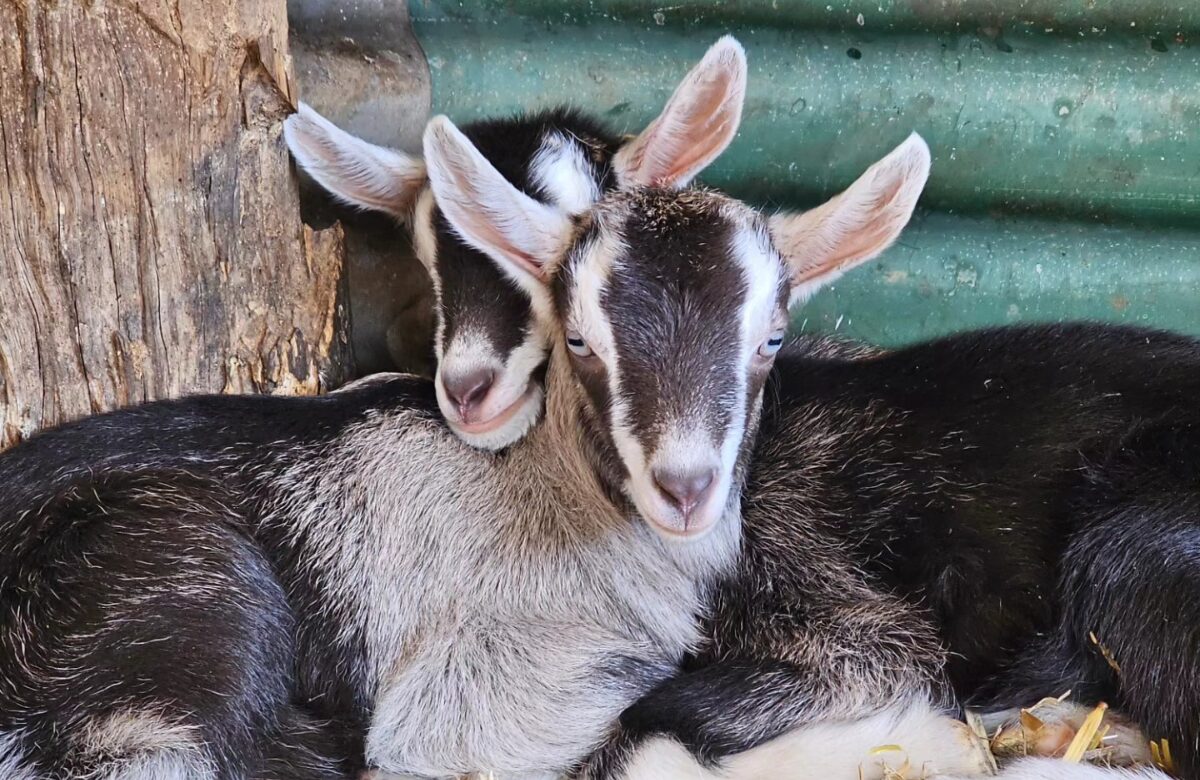
Some of the goats from the farm
What was the process of taking this from concept to a realised product?
Turning that idea into reality wasn’t instant. It meant experimentation, failure, refinement and patience. Freeze-drying had to preserve flavour, aroma, nutrition and texture — not turn the cheese into a shadow of itself. The result? A light, crisp, crumble-ready feta that rehydrates beautifully, melts into doughs and batters, and delivers punchy savoury flavour without excess moisture. For bakeries and food manufacturers, this changed the game as there was no refrigeration, no rush, and no compromise.
Goat cheese is one of those fantastic ingredients that pairs well with sweet and savoury flavours. What should bakers keep in mind when working with it?
Goat cheese is one of those rare ingredients that plays beautifully in both worlds. Savoury bakers already know its magic with herbs, olive oil, vegetables and sourdough. But in sweet applications? That’s where surprises happen — paired with honey, citrus, berries, nuts or dark chocolate, goat cheese adds balance, richness and intrigue.
The key for bakers is understanding moisture and intensity.
Fresh goat cheese shines when you want creaminess, softness and visual presence — think fillings, cheesecakes, tarts and whipped spreads. The freeze-dried feta is your secret weapon when you want concentrated flavour without added moisture, consistency across batches, shelf-stable storage, and easy scaling in commercial kitchens. It folds into doughs, biscuits, crackers, pastries and savoury loaves effortlessly — and a little goes a long way.
Are there any misconceptions about goat cheese?
One of the biggest misconceptions about goat cheese is that it’s “strong” or “goaty”. In reality, well-made goat cheese is clean, fresh and nuanced — especially when produced from calm, healthy animals. Another myth: that it’s hard to work with. With the right format, it’s one of the most adaptable ingredients a baker can use.



COMMENTS