


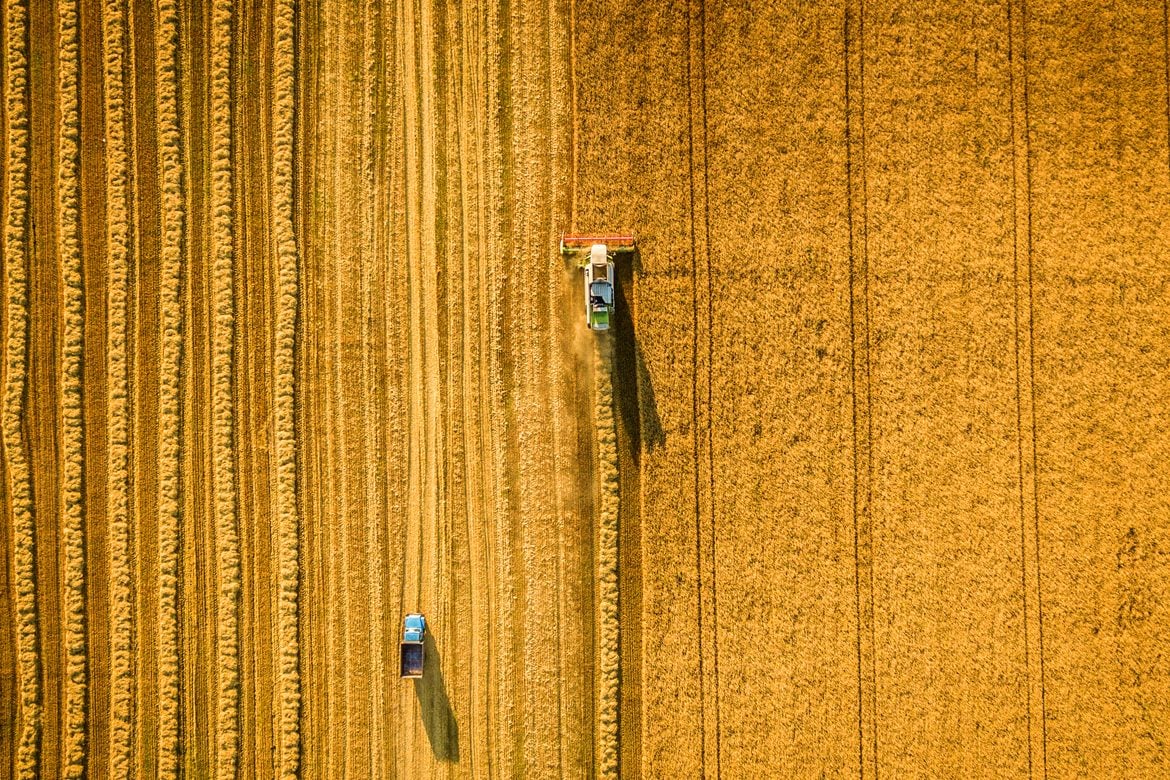
Wheat has been in the spotlight lately from many different angles, including health to sustainability. Artisan bakers are increasingly rejecting the flour they’ve been using, ancient grains are seeing a resurgence and farmers are seed breeding different varieties of wheat. So, is there really something wrong with modern wheat?
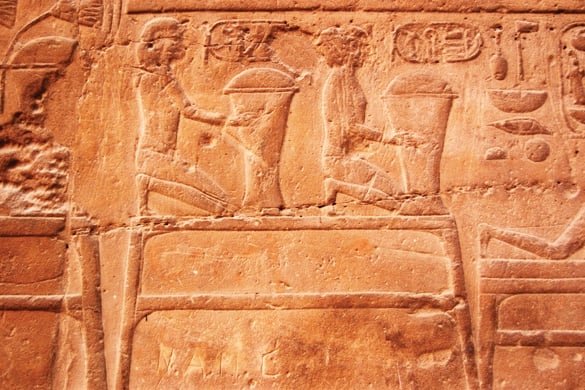
Wheat itself is an ancient grain and humans have been consuming it for thousands of years. It originated in the Levant region, which is the modern day Eastern Mediterranean encompassing Cyprus, Palestine, Israel, Iraq, Syria, Jordan, Lebanon and Turkey. People began cultivating wheat by crossing strains of wild grasses around 8000 BCE. In domesticated wheat, traits were bred that were favourable to farmers, the most obvious being large grains. But, some characteristics, such as breeding the wheat so that the seeds remain attached to the ear, meant new varieties could not survive in the wild.
Early varieties of wheat included emmer and einkorn, which can be traced back to around 8000 BCE. Wheat spread throughout the world and through the ages the crop has changed significantly, with many different strains available. In general, modern varieties of wheat have been genetically engineered to produce a higher-yielding and lower-costing crop.
Michael Klausen of Brasserie Bread is at the forefront of experimenting with ancient grains and seed breeding and on the question of whether there’s something wrong with modern wheat, he says the answer is yes and no.
“The problem with modern wheat is that there has been a really selected breeding process to give good yield, and to match the environment it’s growing in,” Michael says.
“The farmers might say my neighbour used that variety so I’m going to use that next year.”
According to Michael, farmers get paid on protein level, so the crop has been engineered to have a high protein level, as well as the quality of the screening.
“Nobody thought about nutrition and flavour, and that’s what’s wrong with modern wheat,” Michael says.
We discussed the various milling methods in our Oct/Nov 2016 issue of Baking Business, highlighting that a gentle milling process, such as stoneground milling, helps preserve the nutritional value of the crop in the finished flour.
So, it’s not entirely the crop’s fault for lacking nutrition – the way it’s processed also plays a huge role. It’s also not true that the modern wheat crop is necessarily environmentally unsustainable.
“With the farmers that work for us, they do not do any kind of chemical spraying and use natural fertilisers in the ground through composting,” Michael says.
“They are still using modern wheat and it has good baking capabilities, but we can do a lot better with flavour.”
However, many farmers for numerous reasons do not farm organically, with the genetic modification of the crop in some instances making it difficult to do so, or pressure on farmers getting the highest yield for the smallest cost means pesticides are used.
Dr John Williams made the point at the BAA conference in 2016 that gluten protects wheat from pests, so wheat has been grown with this in mind. Add to this rapid fermentation times some bakers utilise that don’t allow gluten to break down, and he says we have gluten overload – a global health phenomenon.
But, genetic modification of crops is not necessarily a bad thing for sustainability either. Look at Australian cotton for example – genetically modified cotton in Australia has reduced chemical spraying by 80 per cent as a more disease-resistant crop was bred.
While the wheat crop itself, although presenting challenges, may not be fundamentally bad, processing methods, seed breeding and experimentation with different grains looks to be on the rise.
The process of seed breeding is more complex than one might imagine. Modern varieties of wheat cannot be easily crossed with ancient varieties to take the best qualities from both, as the difference in chromosome composition doesn’t allow it.
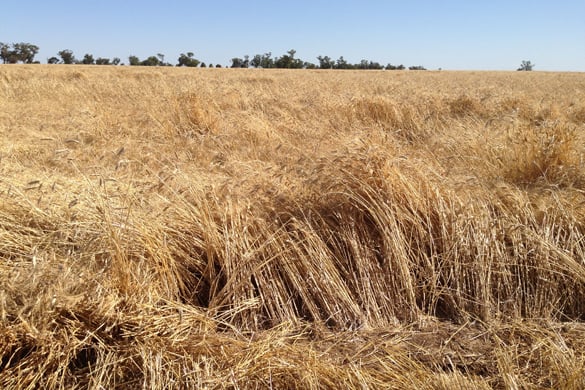
Some species of wheat are diploid with two sets of chromosomes and some are polyploids with four or six sets. For example, einkorn wheat is diploid and emmer is a tetraploid containing four sets of chromosomes. To breed, the strains of wheat need to have the same chromosome composition. Ancient grains typically have simpler compositions, whereas modern wheat often has more complex compositions.
Michael Klausen says that ancient grains will become more popular in the future in Australia, already taking off in the United States, particularly in boutique bakeries.
“It’s absolutely something that will come to Australia but it’s a matter of having the access to it as well as having the skill and understanding to use it,” he says.
“It’s not as easy to work with and it’s a lot more expensive.
“A lot of the modern style of very gently mixing, only folding dough, high hydration and high baking temperature actually leans itself really well to what’s going on with ancient grains.”
Michael is working extensively with emmer, an ancient variety of wheat, and says the flavour and nutrition value of it is sensational.
“Emmer is special in a lot of ways, but first of all it has the most beautiful, beautiful flavour. It really has a stronger flavour than you normally find in wheat,” he says.
“We’re using it in a wholegrain variety and it just comes across absolutely beautifully.
“We are also working with a sprouted loaf, so that’s again something that brings out a whole new flavour pattern.”
Michael is determined to create a very nutritious and delicious wheat crop and he’s working with a seed breeder who has planted approximately 100 different heirloom varieties.
He will then receive one kilogram of each variety that will then be baked into a cracker for a tasting panel.
“Then we’re going to choose the top 10 flavours and work with them to see how we can introduce them into the modern wheat and find a variety that will improve the flavour,” he said.
While there may not be something inherently wrong with the modern wheat crop, one thing is for sure – there will be change.



COMMENTS