


Salt has long been used as both a seasoning and a way to store and preserve meat and fish before refrigeration was a thing, and at certain points in history could be traded ounce for ounce with gold. In Medieval Europe, your positioning at the dining table in relation to the salt pillar also determined social hierarchy.
Tasman Sea Salt founders Alice Laing and Chris Manson take us through their business journey, and explain just how they create their groundbreaking product.
Can you tell us about Tasman Sea Salt’s history? When was it founded, where and why?
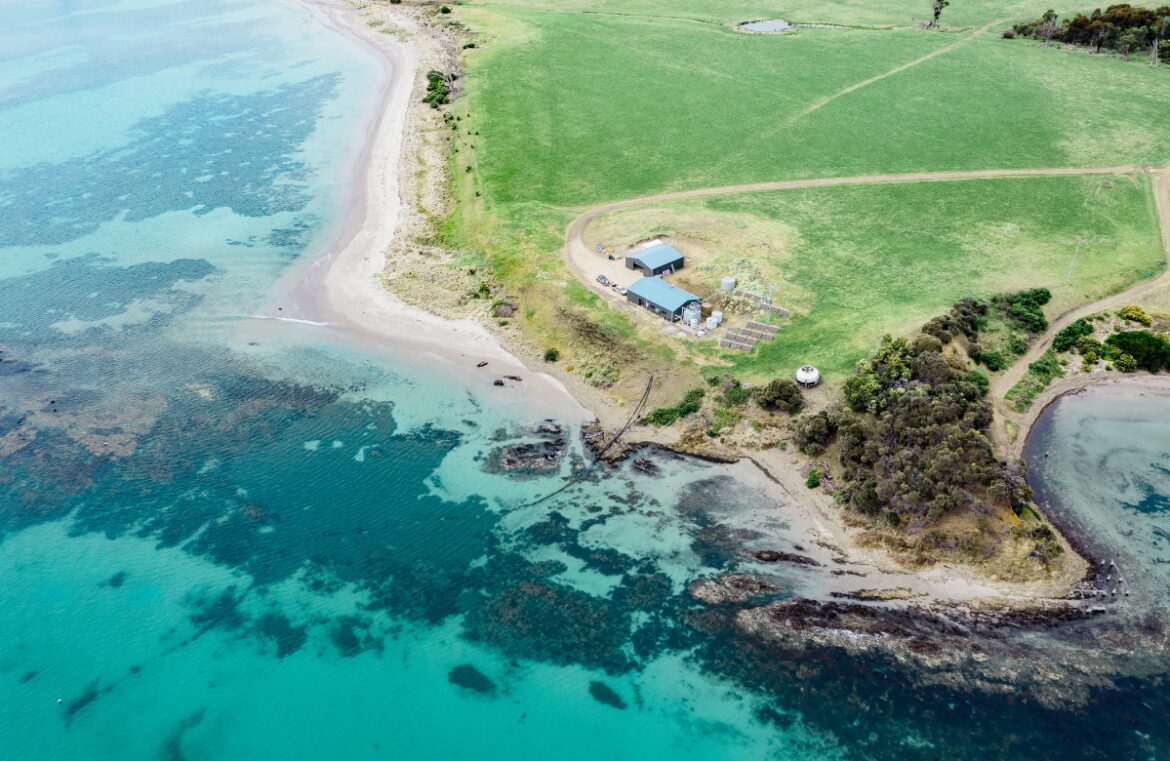
Tasman Sea Salt was founded on the east coast of Tasmania in 2014 by me, Alice Laing, and my husband Chris Manson. We were living in the UK when we came up with the idea to move back to Chris’ home state of Tasmania to harvest sea salt. We believed that the clean waters of Tasmania’s remote east coast could produce an exceptional sea salt – and the results were even better than we had expected.
Can you tell us about the salt itself? How is it harvested, and what does the process involve?
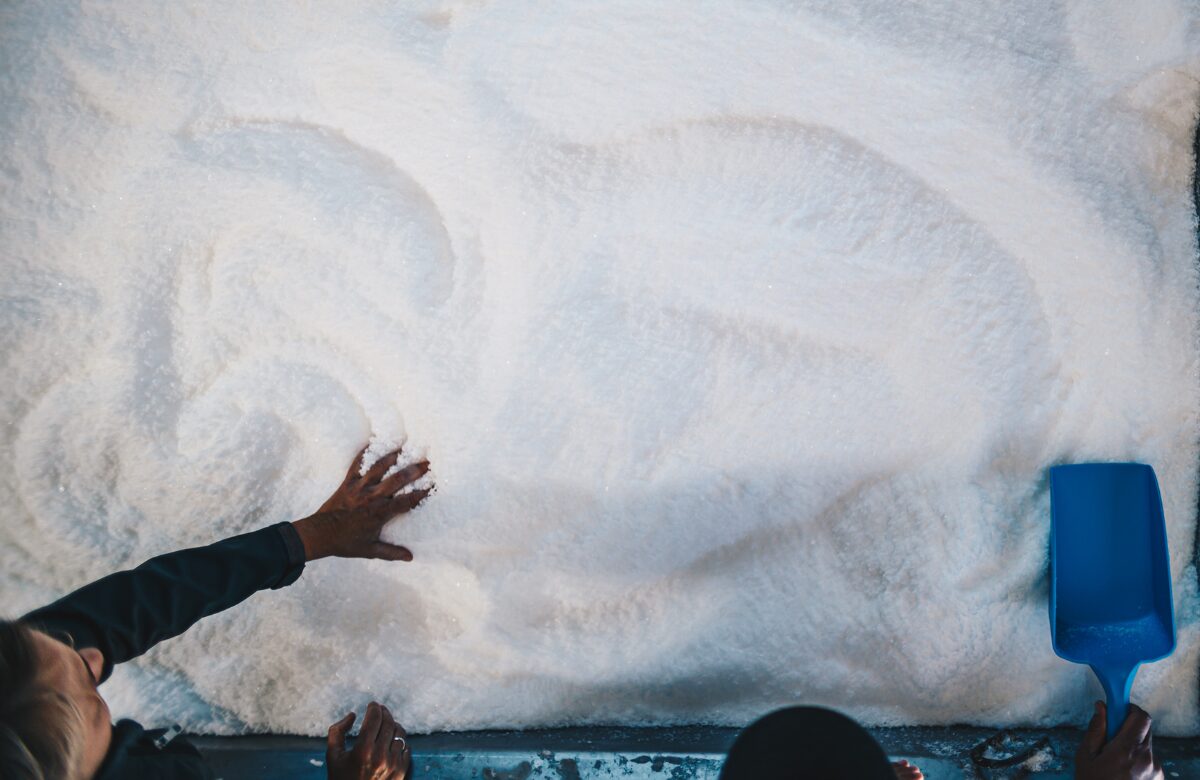
Because the sea water on the east coast of Tasmania is so clean, we really don’t have to do very much to it – it is a very simple process. We evaporate fresh water from the sea water to concentrate the brine, then crystallise our salt flakes out of it. We don’t wash or refine the salt crystals.
The tricky thing was finding a way to do this that protected the pristine environment that is the source of our salt’s purity. Many traditional ways of harvesting salt are either very energy intensive or have a very large footprint, and this didn’t fit with our values or vision for a pure Tasmanian sea salt. So, we developed a way of harvesting salt that uses naturally occurring energy sources throughout the evaporation process. As far as we are aware, we are the only people harvesting salt in this way.

Alice Laing and Chris Manson
You use naturally occurring solar and thermal energy to harvest the sea salt. What does this involve?
We use evaporative cooling to concentrate the sea water, which takes naturally occurring evaporation rates and amplifies them. Our process is particularly suited to the cool, relatively dry conditions on Tasmania’s east coast. The prevailing westerly winds bring rain to the west coast, while the mountains leave the east coast in a much drier rain shadow.
The unique thing we do is amplify this process through the application of naturally occurring heat. We use solar energy during the day, but actually our main source of energy is thermal energy from the ocean, which we transfer to our evaporative cooling process to accelerate evaporation. This works best at night time, in the middle of winter, so, rather counterintuitively, this is our best time for concentrating the brine.
This process evaporates fresh water from the sea water, leaving us with a concentrated brine which we then crystallise our salt flakes out of. This is a slower process and can’t be rushed – it is the temperature and speed at which you crystallise that determine the size of your salt flake. Tasman Sea Salt is a medium-sized, soft sea salt flake that will melt into your food. It takes us a week to crystallise these flakes from a pan of brine.
What happens after the salt has been harvested?
We cover the whole production process, from sea water extraction to distribution, at our saltworks at Little Swanport. Once the salt has been harvested, we dry it and then either mix it with the ingredients for one of our salt mixes, or leave it as it is for our signature Natural Flakes product.
We then package it up in different pack sizes depending on what the salt is being used for. We have our retail lines for sale to customers through grocery stores, providores and our own online store. We have food service lines for restaurants and chefs, and bulk lines for large restaurants or other food manufacturers.
What does a week at Tasman Sea Salt look like?
Our evaporation process runs automatically. We have lots of different sensors and thermometers measuring the temperature of the air and the ocean, as well as the humidity. When the conditions are right, our evaporative cooling process runs.
Once a week we change over our crystallisation pans. We take the final harvest of salt out of each pan, having already harvested flakes twice during the week, then clean the pans and refill them with brine. And we package a different line most days.
But honestly, most of our work is cleaning and maintenance! Salt is very corrosive, so this is one of the most important things we do, and we have a very rigorous maintenance schedule that the team follows.
Some of Tasman Sea Salt’s products
What should bakers and cooks keep in mind when choosing a salt?
I think it is worth paying attention to where and how your salt is harvested, as different salts have different flavours and textures. For us, the appeal of an unrefined sea salt is that it retains naturally occurring sea minerals, which contribute to its distinctive flavour. Because we don’t wash or refine our salt crystals, we retain those minerals in the finished salt.
It also depends on what you are using it for. Our soft flakes melt into food, but they also give a lovely delicate crunch when used as a finishing salt. For baking, it is worth measuring by weight when changing between salt types, as a spoonful of flakes won’t weigh the same as a spoonful of fine salt.
What’s a little known fact about sea salt?
Salt used to be as valuable as gold! Before refrigeration, it was essential for preserving food, so it had huge value and influence. There are stories of Roman legionnaires being paid in salt, and the word ‘salary’ has its roots in the Latin word for salt. Venice’s wealth and power were closely tied to its control of the salt trade. Some of these stories are better established than others, but that is part of the fascination. Something we now take for granted on the kitchen bench has played an extraordinary role in people’s lives and throughout history.
Is there anything else you’d like to add?
Salt can make such a difference to sweet baking as well as savoury food. A few flakes on a chocolate biscuit or over caramel can really bring out the flavour, and they add a lovely bit of texture too. It is a simple ingredient, but it has a lot to offer.



COMMENTS