


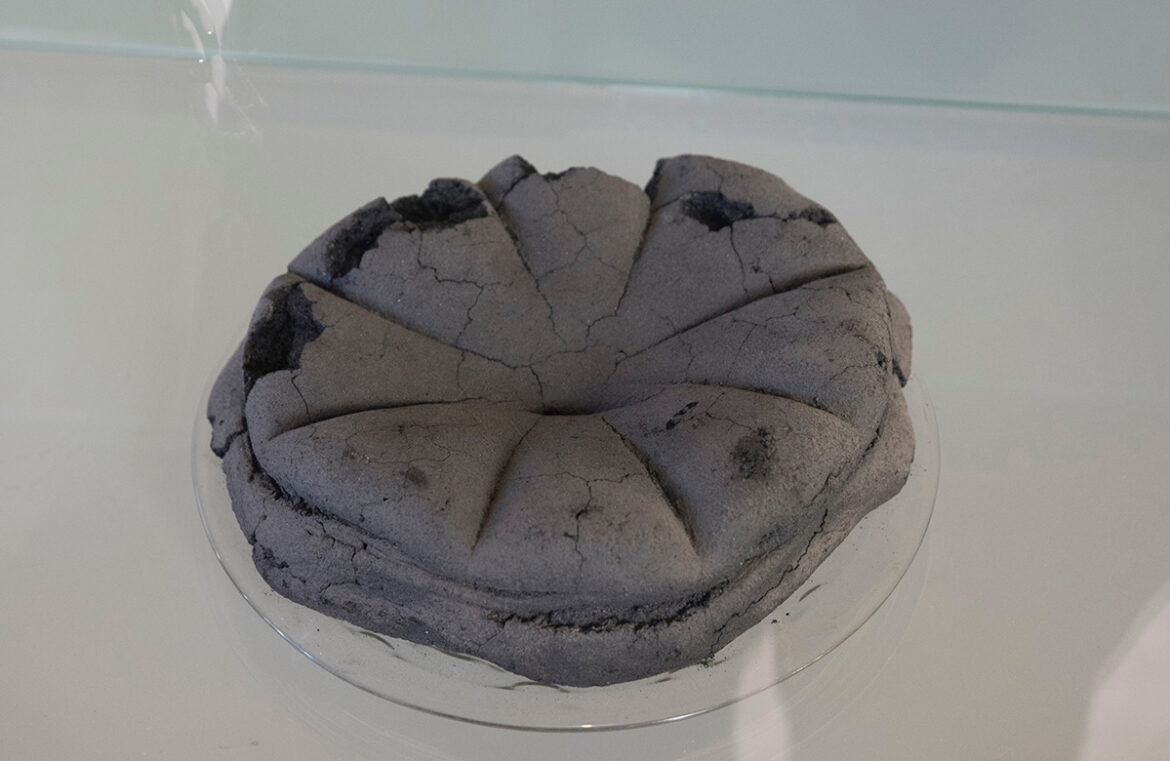
Bread made using traditional traditions is once again for sale at Pompeii, nearly 2000 years after the Italian city was buried in ash and pumice stone.
Roman bread archaeologist and food writer Farrell Monaco has spent a decade studying the carbonised loaves in labs and conducting baking experiments before bringing her research – and several hundred recreated loaves to the inaugural agricultural fair held inside the ancient city.
According to The Telegraph the recipe is an approximation based on the available research about grains, leavens, millling and extraction methods.
“I was interested in Roman food and diet, and as soon as I saw there was a gap in the research, I decided I was going to try to fill in the bread bank,” Ms Monaco said to The Telegraph.
“The research thus far is largely focused on the production process and ovens.”
So far 35 bakeries have been uncovered in excavations across the city, and in 1862 archaeologists found 81 loaves of bread preserved in a sealed oven in what is now known as the Bakery of Modestus. Three kinds of bread were most commonly found in Pompeii including a sacrificial cake, bread rings – called Arculata – and panis quadratus sectioned bread.
Pompeii microbiologists found the panis quadratus bread was lightly leavened and made using a variety of multi-grain flour breads.
“They chucked it all into the mill, a testament to their frugality and the value they put on bread,” Ms Monaco said.
“Today we let it go mouldy on the counter, but they locked it up to protect it from thieves.
“Did they cut and run as the bread was baking, or were they lobbed in there by bakers expecting to come back, maybe to protect them from looting? We may never know, but it is a mystery that obsesses me.”
The Archeo-Agricultural Fair was held in mid-April with the aim of linking archaeological heritage with traditional farming knowledge, and included a number of exhibition stands throughout the city the featured local produce and crafts.


COMMENTS