


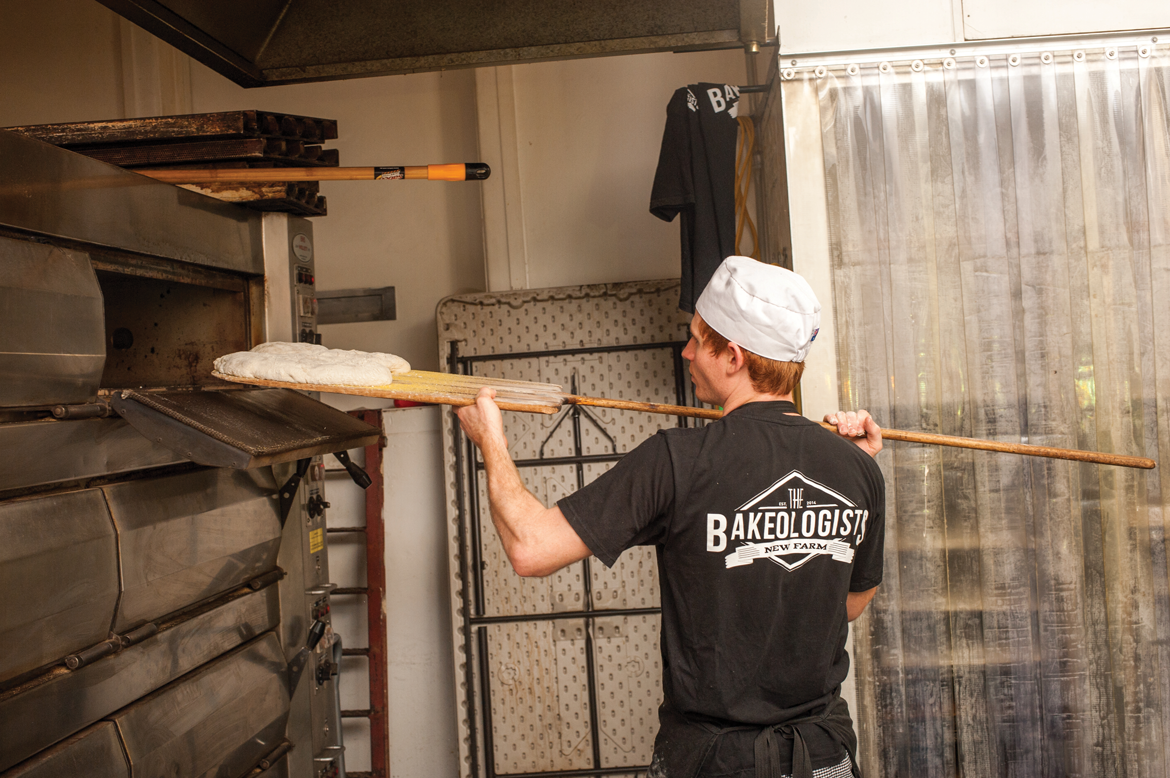
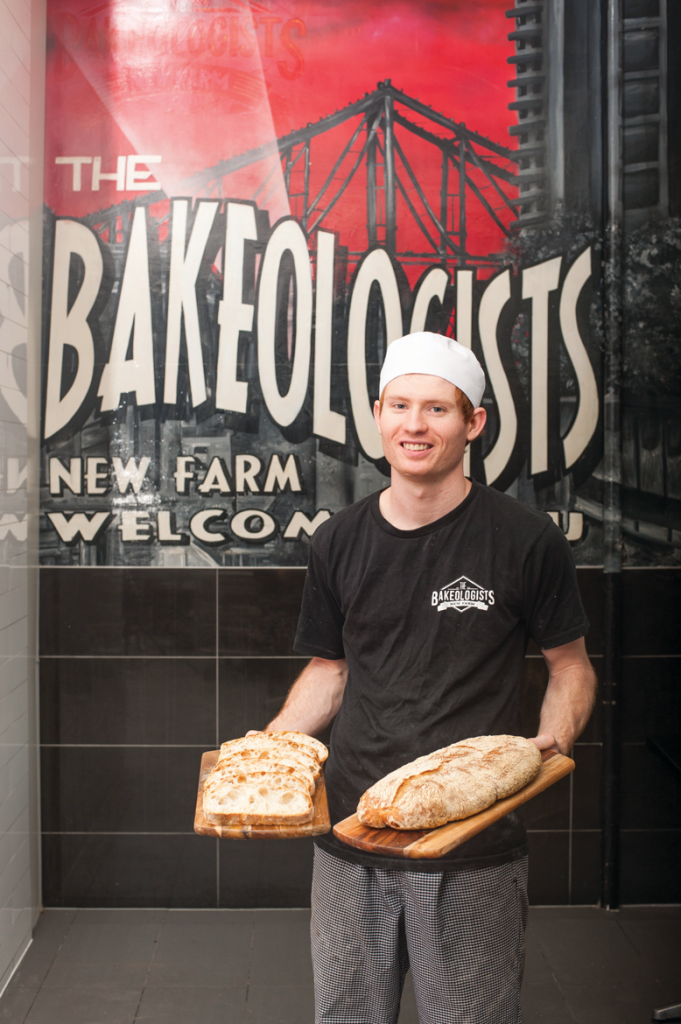
A relatively modern style of bread created as the Italian answer to the French baguette, Ciabatta has become an instant classic, known for its elongated shape and soft, yet chewy texture. Young up-and-comer Brendon Woodward of the Bakeologists, Brisbane, shows us how it’s done.
Brendon Woodward’s love affair with baking began with his apprenticeship that commenced on the fitting date of
February 14, six years ago at Le Sebastian in West End, Brisbane. He’s also worked at Brumby’s, and his current employer, Bakeologists, since their opening in 2014. Brendon has won numerous competitions for his bread skills, including recently winning gold at Worldskills in the bread category, earning him a scholarship to the UK.
Brendon attributes his competition success to a really competitive drive, a lot of time, effort and sacrifice, as well as having people from the industry supporting him. But it also comes down to his love of bread.
As his first job leaving school was in bakeries, Brendon worked with bakers who had a lot of pride in what they did, passing that pride on to him.
“Bread is a staple in most of the world and has opened up a lot of opportunities for me that I otherwise wouldn’t have been exposed to,” he says.
“Now I understand bread better and I’m always looking for new recipes and making products that have great texture, taste and are really visually appealing.
“I think there is a growing trend in artisan baking – people are after better quality breads and products, and are also more aware of additives and artificial products.
“I think it’s great that people enjoy the skill and extra effort that has been put in too.”
Brendon Woodward loves ciabatta because he appreciates breads with a really good texture and flavour.
“Ciabatta has a really soft, slightly chewy, open crumb, and the addition of levain gives it a subtle flavour. It’s a recipe that can be easily adapted to suit different bakery environments.”
Ciabatta
WHAT YOU NEED
Poolish
| Ingredients | % |
| Bakers flour | 100 |
| Water | 80 |
| Yeast | 0.5 |
| Levain | 10 |
Final Dough – Stage 1
| Ingredients | % |
| Bakers flour | 100 |
| Salt | 2.5 |
| Yeast | 1 |
| Water | 65 |
| Poolish | 45 |
Final Dough – Stage 2
| Ingredients | % |
| Water | 25 |
WHAT TO DO
-
- To make the poolish, dissolve the yeast and leavain in the water. Mix in the flour and ferment for 12 hours. (Water temperatures and fermenting times will vary depending on bakery conditions).
- For the final dough, combine all of the stage one ingredients and mix until 2/3 to 3/4 development. (It’s important not to over-develop the dough at this stage).
- Once the dough is 2/3 to 3/4 developed, begin to add the stage two water. I like to add the water over three stages to keep the dough whole. Once all water has cleared, mix until full development.
- Ferment in a tub for 2- 2.5hrs with one fold after the first hour.
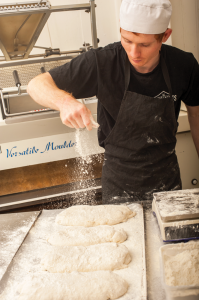
- After the bulk fermentation, heavily flour a bench and tip the dough onto the bench. Lightly flour the dough and scale loaves at 500g. Place the loaves onto a floured tray and dust the top of the loaves. Dry prove for 15-20 minutes.
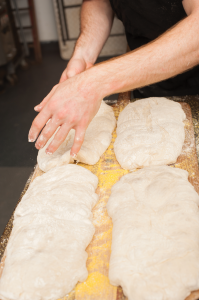
- When loading loaves onto the peel, roll them over so that the bottom is now the top of the loaf.
- Have the oven preheated at 250°C. Bake at 230°C for 10 minutes with steam. Lower the temperature to 200°C for 10 to 15 minutes or until desired bake is achieved.


COMMENTS