


German start-up company Solarbakery is starting afresh after a rocky few years that saw the company be forced to declare bankruptcy in July 2025.
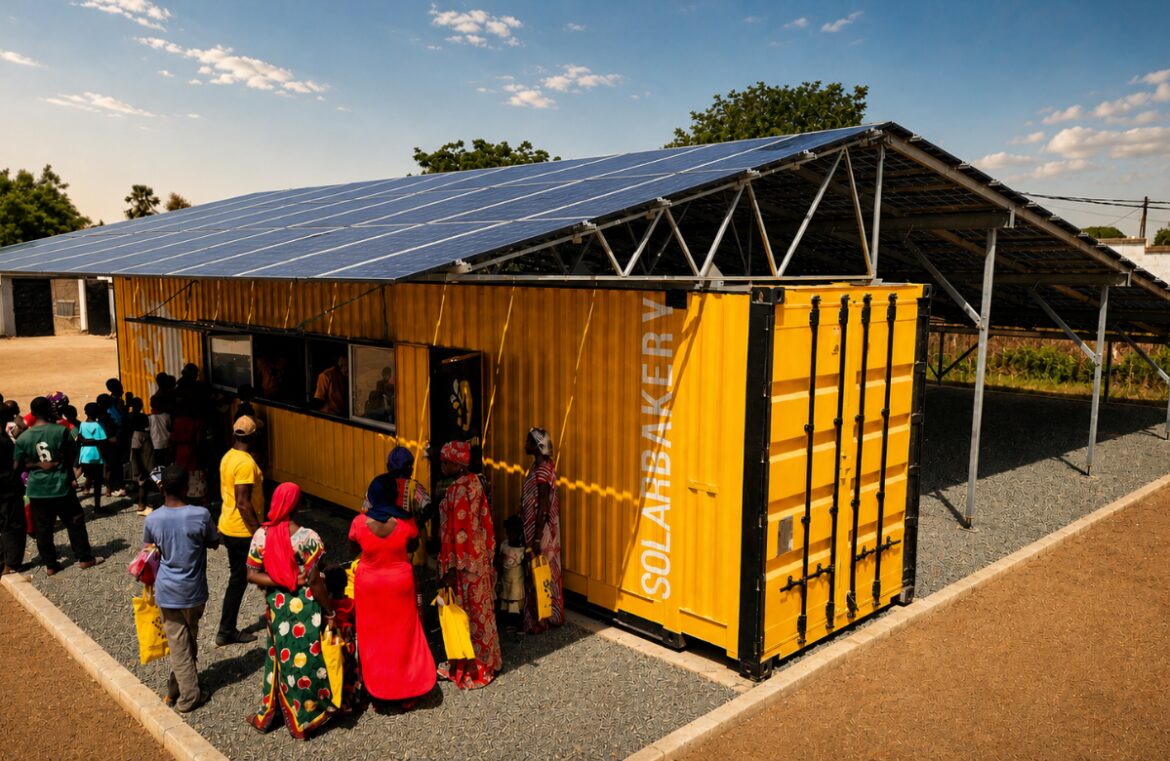
First launched in the Congolese capital Kinshasa in 2016, the start-up was focused on creating artisanal bakeries that would each be located in a fully solar-powered shipping container.
Initial plans were to build up to 30 containerised bakeries across Senegal, however, due to political difficulties in Senegal much of the work was delayed and as a result Solarbakery had to file for insolvency.
Rather than accept defeat, however, co-founder and chief executive officer Torsten Schreiber said with the help of their friends, families and former investors they have been able to get Solarbakery back on its feet and are now ready to launch the African branch of the company.
He said the past 12 months had been a difficult time for everyone involved.
“It was painful, especially because many people had believed in the mission from the beginning: our team, our families, friends, early supporters and many crowd investors,” he said.
“For me personally, it was not only a business set back, it was also a very emotional moment because the mission itself was still alive and the need for affordable, locally produced bread in African markets had not disappeared.”
Torsten said as part of rebuilding the business, key assets were acquired from the insolvency estate and they began to focus on rebuilding the project with a much leaner but more focused structure.
“The process forced us to be very honest. We had to separate what was idealistic from what was commercially viable. We had to simplify the model, reduce the overhead, focus on one strong African launch market and build a structure that can grow step by step instead of trying to do too much at once,” he said.
“In that sense the restart is not simply a continuation. It is a more mature version of Solarbakery.”
This has also included the design and construction of a third prototype for the containerised bakeries, which Torsten says are the culmination of years of learning from the first two systems, as well as from bakery operations in African markets and from the technical realities of producing bread with renewable energy.
Torsten said their newest protype was based on two 20-foot high cube containers – one that is a fully equipped bakery module and the other one an energy module.
“The bakery module includes an electric rack oven, dough preparation equipment, cooling and working areas, and a layout designed for professional daily production,” he said.
“The energy module provides the solar power system, battery storage, electrical control and energy management. Depending on the final site configuration, the system is designed with around 80kWP of solar power and approximately 84-196kWh of battery storage.”
Torsten said the target capacity for the new models was up to 3000 baguettes or similar bread products per day, however it was vital to note the key was not simply to put bakery equipment into a container but to make the whole process work around solar energy: production rhythm, oven usage, battery sizing, cooling, maintenance, local operation and cost efficiency.
“In the early phase Solarbakery was often described as a technology and impact start-up. Today, we see it much more as an operating bakery business supported by renewable energy technology,” he said.
“Over the next few years our focus is on proving the model in sub-Sahara-Africa, building a reliable local team, reaching stable daily production, and then expanding to additional sites. We want Solarbakery to become a replicable platform for local bread production in African growth markets.
“The goal has not become smaller. It has become clearer.”


COMMENTS